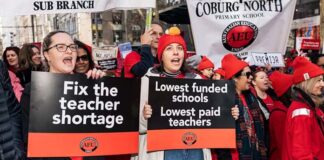

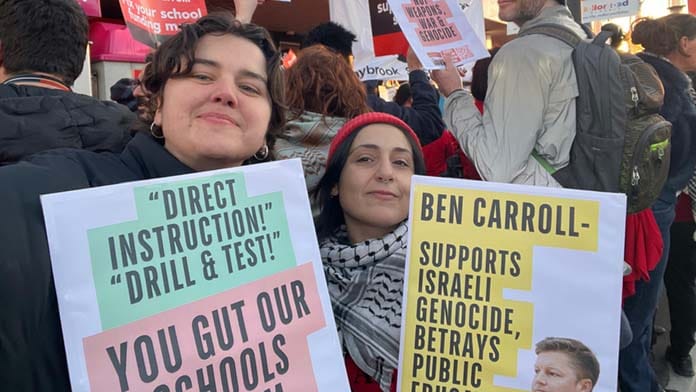
Hundreds of enraged teacher unionists rallied outside Victorian Education Minister Ben Carroll’s office after school on 19 June, demanding the Labor government reverse its cut to public schools.
With major fanfare, the state and federal Labor governments made a major pre-election declaration to fully fund every public school to 100 per cent of the school resource standard. Despite rank-and-file members’ demands to see the actual agreements, and details about when schools would see the money, the AEU rolled out a federal election campaign uncritically celebrating Labor’s commitment to full funding.
But cabinet-in-confidence documents reveal that the Victorian Labor government had already decided to delay its funding increases until 2031. This means the Federal government will also delay its increases, resulting in $2.4 billion less funding than they committed to.
The Victorian Budget in May confirmed the cuts. The public schools EBA expires in December and there is no money for any increases to the wages of the worst paid teachers in Australia.
The funding shortfall for Victorian public schools could easily be met by prioritising education over the Allan government’s $1.6 billion to “back in Victoria’s new bail laws”, which includes more than 300 prison guards for children’s prisons, each paid an $8000 sign-on bonus. It could also easily be paid for from the $9.7 billion unallocated “contingency fund”.
AEU members are more than ready to strike for the wages and conditions that would relieve the crisis in public schools.
But the leadership are so anxious to abide by the suffocating anti-strike laws that they block any motions that suggest members should be preparing for strike action, for fear they might make us look like we aren’t bargaining in “good faith”.
But good faith from the government is well and truly out the window. Members need to keep strengthening our rank-and-file networks. We need to use our strike pledges and sub-branch and regional meetings to assert our “red lines” and discuss the kinds of defiant action we will need. When it comes to calling, and calling off, strike action, members need to be in control.
By Lucy Honan