
This year’s instalment of the Talisman Sabre war games was the largest yet—designed to send a message to China about growing preparations for war. US Secretary of the Army Dan Driscoll openly boasted that the exercises were part of “actively designing our army so that we are capable of responding to any threat from China”.
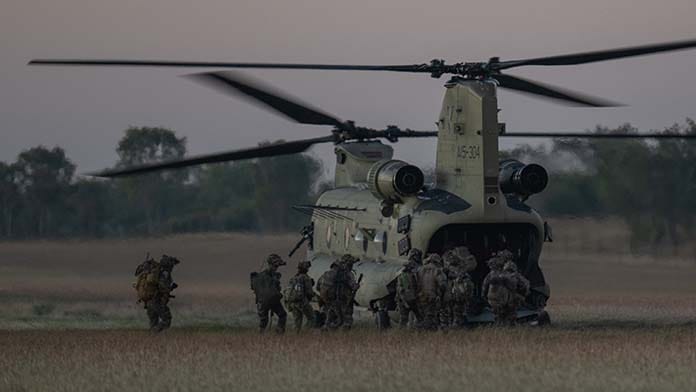
The exercises take place in northern Australia every two years. This time they involved 35,000 military personnel from 19 countries over three weeks. Australian troops were joined by forces from the US and allies including the UK, Canada, Japan, France, Germany, New Zealand, the Philippines and South Korea. This year exercises were also held for the first time inside Papua New Guinea.
The Australian military was keen to show off some of its new capabilities, launching the US’s cutting-edge Precision Strike Missile (PrSM) for the first time. Fired from a HIMARS launcher, it can pinpoint targets 500 kilometres away, well beyond the army’s previous limit of 30 kilometres.
The exercises aimed to increase interoperability for joint operations in war and focused on battlefield scenarios likely in the Pacific, including “island hopping” mirroring US operations in the Second World War, amphibious landings, air and naval combat missions.
The US sent its George Washington Carrier Strike Group, carrying a fleet of F-35 fighter jets, alongside thousands of marines, amphibious assault ships and paratroopers.
Lieutenant General Joel B. Vowell, the Deputy Commanding General of US Army in the Pacific said the exercises were, “A powerful demonstration of our combined strength, trust, interoperability, and readiness across the Indo-Pacific.”