
Iran’s Islamic Republic regime has faced its biggest challenge from below since the 1979 revolution toppled the Shah.
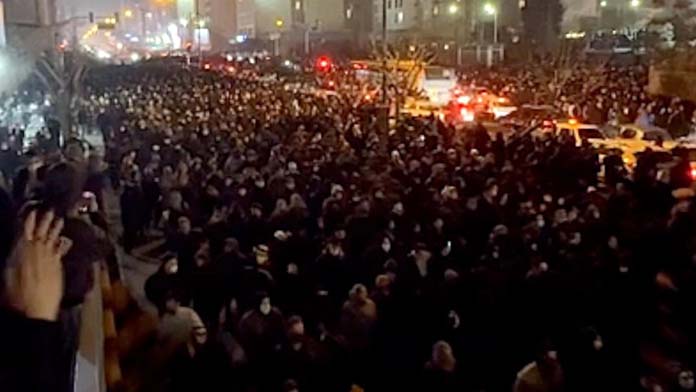
Demonstrations and strikes have shaken the repressive regime. They spread to 187 cities in 31 provinces after the merchants at Tehran’s Grand Bazaar walked out on 28 December over currency devaluation and rampant inflation.
Chants of “Marg Bar Diktator (Death to the dictator)” directed at Iran’s supreme leader, the Ayatollah Khamenei, have been heard across Iran. But the repression has been brutal.
The casualties are already five times those suffered during the Women, Life, Freedom protests that erupted in September 2022, when Mahsa Amini, aged 22, died in custody accused of wearing her hijab improperly.
Many of the injured today have been blinded and many of those killed have been shot through the head.
The Iranian government is now admitting more than 6000 protesters and around 300 security personnel have been killed. Some reports suggest as many as 12,000 might be dead. More than 21,000 have been arrested.
International sanctions
The economic and political crisis in Iran is very deep. International sanctions designed to crash the economy have frozen oil revenues and drastically cut investment in the oil and energy sectors.
In 2019, Trump extended sanctions targeting petrochemicals, steel, aluminium, copper, as well as senior Iranian officials.
As usual, sanctions have hit the workers not the bosses and bureaucrats. Over the past eight years, Iranians’ purchasing power has fallen by more than 90 per cent. Youth unemployment is about 20 per cent.
Inflation has skyrocketed. Food prices have soared by an average of 72 per cent compared with 2025; the price of rice increased 900 per cent between 2022 and 2025.
Iran’s rulers have tried to blame Israel and the US for the protests. But discontent with Iran’s rulers has been growing for years. Protests have rocked Iran’s rulers in 2009, 2017, 2019, 2022 and now in 2026.
The potential for the protests to connect with the social power of the working class that was crucial to toppling the Shah in 1979 can be seen in the actions of workers in the industrial centre of Arak.
In late September, some 4000 Arak Aluminium Company workers ended 43 days of hunger strikes, sit-ins over unpaid wages and demands to remove the CEO and the head of security. Subsequently, Arak iron workers began their own strike.
At the height of the protests, on 11 January, workers’ councils in Arak issued a call “to the people of Iran”, saying, “For decades, our demands for bread have been answered with bullets, and our demands for dignity with prison. But today, the silence has come to an end …
“We are not here only because of unpaid wages. We are here to decide how this factory and this country must be run. The era of employers and clerics has come to an end. All power to the councils!”
Trump’s hypocrisy
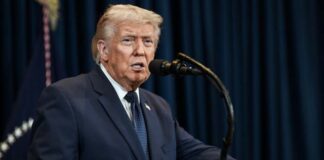
Trump declared, “Help is on its way.” But Trump doesn’t want regime change in Iran, he wants a compliant regime.
Look at Venezuela—he arrested Maduro but the regime is essentially unchanged. Trump is looting Venezuelan oil but ordinary Venezuelans don’t come into it.
In 1991 President George Bush called on Kurds and Shia in Iraq to revolt against Saddam Hussein but did nothing as Hussein brutally crushed uprisings.
More than 1000 protesters were massacred by Egypt’s ruler Abdel Fattah el-Sisi in Cairo’s Rabaa Square in 2013. But el-Sisi remains one of Trump’s favourite dictators, invited to be on Trump’s “Board of Peace” to administer Gaza.
The Western media made much of the possibility of Reza Pahlavi, the son of the shah, returning to rule Iran. But this is wishful thinking. Pahlavi, who represents more of the same neo-liberal capitalism already imposed by the Islamic clerical rulers, has no base of support on the streets.
The Tehran and Suburbs Bus Workers’ union statement made that clear, “While declaring solidarity with the popular struggles against poverty, unemployment, discrimination and oppression, we explicitly declare our opposition to any return to a past dominated by inequality, corruption and injustice.”
Despite the savage repression, the Women, Life, Freedom protests left their mark on Iranian society. Many women no longer wear the hijab and the religious police disappeared from the streets.
The regime has lost legitimacy. Iran’s rulers have no answers for the deep crisis that grips Iran. The hope lies in building the movement from below against Iran’s ruling class and against Israel and US imperialism.
By Ian Rintoul