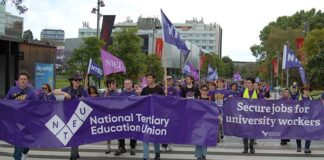

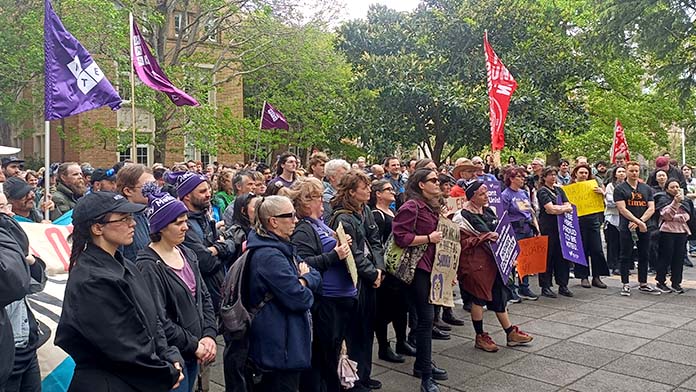
NTEU members at the University of Melbourne have voted to accept an EBA deal proposed by university management. Around 20 per cent voted against the deal at a members’ meeting of around 500 people.
The branch committee says the deal is acceptable; but it falls short on all three claims the branch focussed on for this campaign—workloads, sick leave for casuals, and a consultative major change clause. There is no sick leave for casuals and only weak versions of the other two.
Staff are right to be sceptical about the offer of 17 per cent superannuation for casuals that is being highlighted as a major victory. The university has a stated commitment to de-casualisation, and the increased super would not come into effect until 2029.
With inflation currently above 4 per cent, the pay rise of 3.5 per cent a year over four years is also a cut in real wages.
The sub-par outcome is a direct result of the branch committee’s campaign strategy which has prioritised negotiations divorced from any effective industrial strategy.
A half-day strike was held in week five of semester, and a further one-day strike in week 11 to launch a week-long teaching ban (from which any classes involving in-class assessment were exempt). In the six weeks between them there was no action.
What has been missing are consistent actions aimed at bringing more workers into the struggle and generating support for further strike action across the campaign. The lopsided strategy meant the union had little leverage over management at the bargaining table.
Organising efforts, driven by the rank-and-file, point to what’s needed to win a better deal.
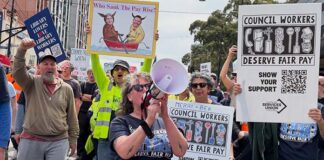
The branch committee initially opposed organising pickets for the week 11 strike! But there were successful pickets, involving over 100 staff across three locations after a members’ meeting carried an amendment to organise them. New members joined the union and open strike committee meetings saw staff members from a wider range of work areas drawn into organising for the first time.
The campaign failed to tap the branch’s potential. With more preparation time to plan effective industrial actions, we could have seen a very different outcome.
Many members can see that the deal is unacceptable. The branch needs to learn the lessons to put us in better stead to fight for the kind of deal that we deserve next time.
By George Wood