
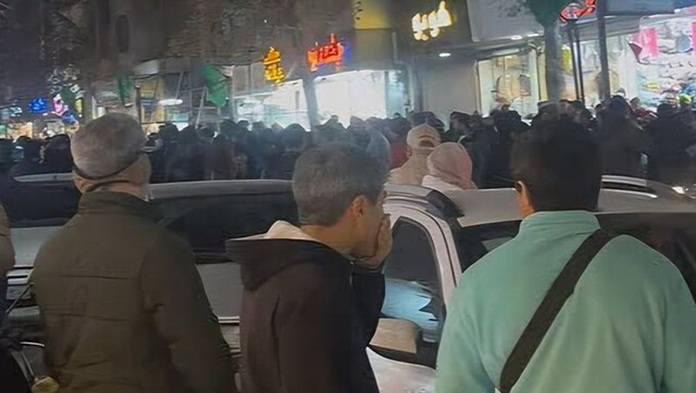
Iran has been the scene of widespread protests for days. Starting in the capital Tehran and focused on economic issues, the protests have spread to become an explosion of public anger against the government and its policies.
The slogans chanted by the protesters reflect the depth of the accumulated dissatisfaction in Iranian society and the deep economic, political and social concerns; from high prices and inflation to protests against the priority of foreign policy over domestic needs and direct criticism of the country’s leadership.
The protests, which began with a strike and demonstration by shopkeepers in Tehran, quickly spread to universities. Although the scale of these demonstrations is not yet as large as the protests after the death of Mahsa Amini in 2022, today’s dissatisfaction is more socially widespread.
Political and economic slogans are intertwined and reflect a general frustration among different segments of society.
The collapse of the national currency has disrupted sales of imported goods and rampant inflation has put a heavy strain on people’s daily lives. According to official statistics from the Statistical Centre of Iran, prices rose by an average of 52 per cent in December compared to the previous year. But the price increases were even greater for basic goods.
The slogan “Freedom, freedom, freedom” has again become a symbol of student protests. Media reports that students at Tehran’s Khajeh Nasir al-Din Tusi University of Technology were chanting the slogan in the university’s hallways while stamping their shoes.
Students in a Tehran University dormitory held a rally, chanting, “Free student, protest, protest.” Following the rally, security forces surrounded the dormitory and blocked the entrances. The next day, the protests spread to at least ten other major universities in the capital.
In Marvdasht, near Shiraz, a group of young protesters chanted a direct slogan against the Islamic Republic’s leader on Thursday last week. “This is the year of the blood, Seyyed Ali is overthrown.” Ali Khamenei has long been the main target of protesters’ chants, with chants such as “Death to the dictator” being raised in Tehran and other provinces.
Students at Tehran University have also chanted “Death to the absolute theocracy”, a slogan that directly targets the ideological foundation of the Islamic Republic and questions the principle of clerical rule over political power.
The slogan “Death to the tyrant, whether king or leader” has been heard at some rallies in response to suggestions by Israel and others to restore Reza Pahlavi, the son of the former Shah of Iran.
Repression grows
The regime initially responded with offers to negotiate with leaders of the protests but repression is growing. So far about 19 people have been killed with hundreds more wounded and arrested.
The regime has also started blaming “foreign influences” for the protests in a cynical attempt at creating confusion. One police spokesperson said, “In some places, individuals outside the main body of the protesters, under the orders or guidance of foreign actors and enemies of the country’s security, tried to turn legitimate protests into destructive and violent actions.”
Since the protest started on 29 December, there have been protests and strikes in at least 123 locations (including 13 universities) across the country in 76 cities across 22 provinces.
According to the HRANA news agency, the news agency of Iran’s human rights activists, cities that have seen protests include Neyshabur, Sabzevar, Esfarayen, Neyshabur, Mashhad, Hamedan, Fardis, Gohardasht, Khorramabad, Qazvin, Tehran, Foladshahr, Zahedan, Marvdasht, Parand, Hafeshjan, Jonghan, Yasuj and Qom.
A video released by BBC Persian shows police using tear gas to disperse the protesters, while gunfire can be heard in the background. Tear gas has been used against night-time protests in Fardis and Khorramabad.
Prosters have raised slogans that criticise the power structure, protest against restrictions on individual and social freedoms, demand justice and oppose the prevailing economic and livelihood situation.
Funerals have also become the scene of protests and during the burial of two of those killed, people chanted slogans.
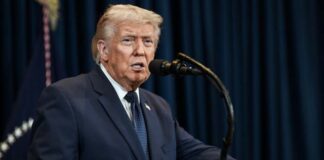
The regime is also using Donald Trump’s statement threatening to intervene in Iran as an excuse to increase repression. Iran’s Foreign Minister Abbas Araghchi called Trump’s stance “irresponsible and dangerous”. Mohammad Baqer Qalibaf, the speaker of the parliament, warned that any “foreign interference” would be met with a “regrettable” response.
The Supreme National Security Council has sent a letter to domestic media outlets, tightening the control and direction of the media coverage.
Freedom and justice
Reza Shahabi, a dismissed worker leader and member of Iran’s Tehran and Suburbs Bus Company, has written, “In a situation where poverty, unemployment, discrimination and repression have brought the lives of millions of noble and hardworking people to the brink of destruction; in a situation where the youth of this land are searching for the simple dream of ‘life’ in a labyrinth of despair; and in the current sensitive situation, as a labour activist who has paid heavy costs for years in the path of achieving the most basic labour and human rights, from dismissal to numerous arrests and long imprisonments, I consider it my duty to emphasise the following points: We, the underclass and workers, not only want bread but also the dignity of freedom, justice and a human future.
“The labour movement and activists must loudly declare that we stand with the deprived and oppressed people. We have not spent decades for others to ride on our fate this time. We must declare—and let everyone know—that we will spare no effort to achieve economic and social justice and for the leadership and maximum participation of workers and toilers.”
By Rouzbeh, Iranian activist