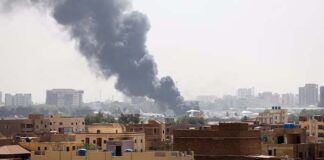

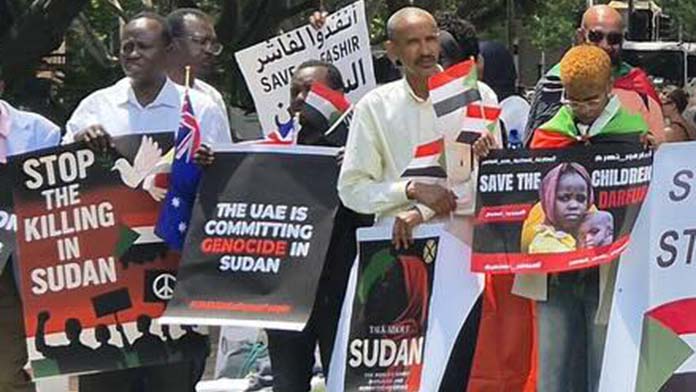
The capture of the city of El Fasher in Sudan in late October by the Rapid Support Forces (RSF), following an 18-month siege, produced horrifying atrocities.
Satellite imagery and the testimony of survivors have borne witness to mass executions and systematic rape among the 250,000 civilians who remained in the city.
For the past two and a half years rival generals in the RSF and Sudanese Armed Forces (SAF) have been fighting a civil war that has produced appalling suffering. Hundreds of thousands of people have been killed and more than 15 million have been displaced in what is now the world’s biggest humanitarian crisis.
At least 1500 to 2000 civilians were killed in the first few days following the RSF takeover of El Fasher. In a single massacre, 460 civilians were killed at a maternity hospital. The RSF has also set out to exterminate non-Arab ethnic groups, including the Zaghawa and Masalit minorities.
The fall of El Fasher has split Sudan down the middle, with the SAF governing from Port Sudan on the Red Sea, and the RSF now controlling the whole Darfur region in the southwest, an area the size of Spain.
Outside powers
Regional powers have helped the war continue by feeding weapons to the rival armies, hoping for a share of Sudan’s resources.
The SAF is backed by Egypt, Turkey, Iran and Saudi Arabia, while the RSF has received support from Russia, Libya, Chad and, most notoriously, the United Arab Emirates (UAE).
Egypt, Sudan’s neighbour to the north, has been an open ally of SAF leader Abdel Fattah al-Burhan since the civil war broke out. Following the fall of El Fasher, the Egyptian military set up a joint command force with the SAF to protect Egypt’s southern border from RSF infiltration.
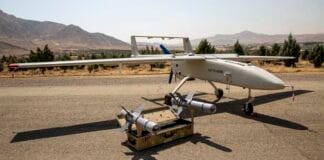
Turkey, despite past rivalry with Egypt, has partnered with them in Sudan, supplying the SAF with drones. Iran has also sold drones to the SAF, keen to increase its influence in Africa and contain the UAE’s.
But the RSF has used its control of the lucrative Jebel Amer gold mines to win its own allies. The gold is smuggled through Chad and the Central African Republic to the UAE, where it can be refined and sold. The UAE has been the primary importer of Sudanese gold since the late 1990s and has interests in the country’s financial sector.
Sudan’s Red Sea coast, offering access to one of the busiest international shipping corridors, is also strategically important.
In 2022, the UAE signed a $6 billion deal to develop the Abu Amama port on the Sudanese coast. But after the civil war broke out, al-Burhan scrapped the deal, condemning the UAE for giving financial support and high-tech weaponry to the RSF.
Last year, a document sent to the UN Security Council revealed that the UAE had armed the RSF with modified drones capable of dropping thermobaric bombs.
None of these states are among the biggest players on the international stage but all of them have an interest in prolonging the war and profiting from the chaos.
They are “sub-imperialist” powers, unable to rival powers like the US or China globally, but able to compete with each other for regional influence.
Counter-revolution
The RSF has rightly been castigated for its atrocities in Darfur but the SAF is not a progressive alternative. As Sudanese activist Khalid Sidahmed put it, “Both sides of the war are two faces of the old regime. They are both equally criminals and militias.”
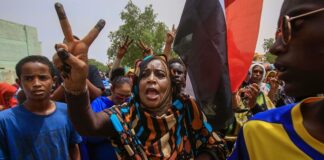
Both armies have set out to roll back the gains of the 2019 revolution that toppled the dictator al-Bashir.
Hemedti, the leader of the RSF, and al-Burhan, the leader of the SAF, used to be allies. They sat together in the transitional government following the revolution.
The revolution mobilised millions of ordinary people, rising up in their workplaces and on the streets against the despotic regime. But without a revolutionary socialist party spearheading the mass movement, the old military and security apparatus survived.
The leaders of the opposition ended up forming a transitional government with al-Burhan and Hemedti.
In October 2021, the two generals felt confident enough to officially seize power, arresting opposition figures and dissolving the transitional government.
The RSF and the SAF worked together for 18 months to crush the revolution. It wasn’t until April 2023 that they began to fight over the spoils, sparking a devastating civil war.
The slogans of the 2019 revolution were “Freedom, Peace, and Justice”. Neither the RSF nor the SAF offers a path towards these principles.
Only a movement from below, carrying the torch of the 2019 revolution, can challenge the power of the generals and build the struggle towards liberation.
By Jacob Starling