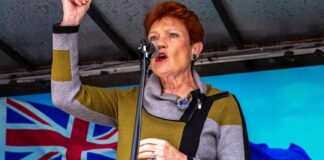

The 21 March state election in South Australia sees a confident Labor government likely to increase its majority. It is also the first major test of whether Pauline Hanson’s racist One Nation can replace a weak Liberal Party as the dominant force on the right.
Hailing from the Labor Right SDA union, Premier Peter Malinauskas strongly supports AUKUS and other “defence” initiatives. He pioneered social media restrictions for teenagers.
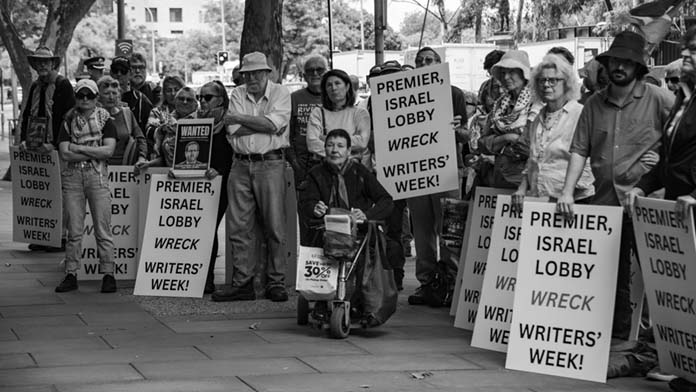
His push for the removal of Palestinian-Australian writer Randa Abdel-Fattah led to the collapse of the popular Adelaide Writers’ Week festival, as authors boycotted to support her. Promises last election of green hydrogen projects have given way to ensuring a profitable future for Adelaide-based gas company Santos.
However, Malinauskas has made sure to talk about issues such as healthcare, housing and cost of living. He has delivered limited tenant protections and took trains back into public hands. His campaign for re-election promises the removal of public school fees, extended out-of-hours child care and a program of building more housing.
Malinauskas also has Rupert Murdoch’s Adelaide Advertiser, the state’s only daily newspaper, onside. Reporting on a 500-strong Property Council of Australia business lunch on 4 March, the Advertiser wrote that Malinauskas, “Was lauded by everyone, from Property Council national chief Mike Zorbas down, for his unbridled efforts to drive state growth, but the Liberal Opposition was castigated as ‘anti-development’.”
One Nation and Liberals’ crisis
The national crisis of the Liberals is particularly marked in SA. The party has seen four leaders since the last election. Ashton Hurn took the job only in December.
One Nation has overtaken the Liberals in polling. On 27 February a Roy Morgan poll put Hanson’s party on 28 per cent, well ahead of the Liberals on 16.5 per cent.
Racism remains key to One Nation’s support, feeding on the efforts of the major parties to suggest that immigration, rather than their failure to act on investor incentives and to build public housing, are to blame for housing costs.
State leader, former Liberal Cory Bernardi, has backed Hanson’s declaration that there are “no good Muslims”. The party has promised to repeal SA’s state Aboriginal Voice to Parliament.
One Nation is falsely linking energy costs to renewables, promising to abandon net zero emissions targets. Bernardi has defended his previous comments that same-sex marriage would lead to widespread bestiality.
ABC analyst Casey Briggs argues, “The electoral geography of South Australia leaves few opportunities for One Nation to actually gain lower house seats.” But it could still win a substantial number of seats in the upper house, which would be a boost to racists around the country.
Malinauskas showed how not to respond to the growth of One Nation, trying to make a case for immigration by asking voters, “Who’s going to feed you and bathe you and wipe your bum when you’re 90? Because it ain’t going to be your kids, because if I get my way, they’re going to be working on submarines with high-paying jobs.”
This allowed Bernardi to pose as more compassionate, replying “caring for the elderly is one of the most meaningful employment careers that anyone can have”.
When One Nation first appeared on the scene in the late 1990s, the major parties united to preference them last, in a stand against their blatant racism. Labor is continuing this approach in this election. However, the Liberals, desperate for every vote they can get, are now directing preferences to Hanson’s party above Labor, even though One Nation has refused to reciprocate.
Among left-wing activists, there is much justifiable anger at SA Labor around Palestine, AUKUS, climate and poverty. Three socialist candidates are standing for the lower house and many activists are putting effort into electoral campaigning for them or for The Greens. There are record numbers of candidates in many seats, as both left and right try to pick up some of the discontent with the major parties.
The One Nation vote started rising dramatically alongside the large racist March for Australia rallies in the second half of 2025. We need to build on the counter rallies led by First Nations activists in Adelaide to a much larger anti-racist movement that welcomes disgruntled Labor voters and others beyond the existing left.
There is a real danger of One Nation becoming a more serious force on the right and pulling the discontent over housing prices and the cost of living in a racist direction.
When we vote we should generally put the Greens first, then Labor, and put One Nation last. But the ballot box won’t deliver the changes we need. The priority for the left must remain building our strength in the streets and unionised workplaces.
By Robert Stainsby