
Venezuela’s Bolivarian Revolution was a beacon for all those who wanted an alternative to neoliberalism and United States imperialism.
Hugo Chavez came to power in 1999 amid popular resistance to neoliberalism. In 1989, for example, the Caracazo Uprising saw a wave of resistance among workers and the poor to a “structural adjustment package” demanded by the IMF loan shark.
The Venezuelan ruling class never accepted the legitimacy of Chavez or workers and the poor having a say in politics.
And the US hated that a Latin American leader could stand up at the United Nations and denounce president George W Bush as the “devil” to applause.
The height of the “Bolivarian Revolution” in the 2000s was life-changing for millions of working class Venezuelans.
Poverty rates nearly halved between 2003 and 2011. By 2011, Venezuela was the most equal country in Latin America.
But redistribution was underpinned by the commodity price boom of the 2000s. The price of oil rose from around £7.40 a barrel in 1999 to a peak of nearly £100 in 2008—and, with oil making up 95 percent of Venezuela’s exports, cash flooded in.
Revenues weren’t spent on diversification of the economy, leaving Venezuela at the mercy of global oil prices.
While the Chavez government had redistributed wealth, it had never led an assault on the capitalist class and its state.
The majority of the economy remained in private hands. State-owned industries were still run according to the logic of profit. That commodity price boom was ending just as Nicolas Maduro was taking over.
Chavez, just before he died in 2013, said that for “new forms of planning and production for the benefit of the people to emerge requires pulverising the bourgeois form of the state”.
Maduro did the very opposite. He doubled down on the same policies, turned to printing money to mask problems and became increasingly authoritarian. Social crisis ravaged Venezuela and saw millions of people leave.
Key battles during the 2000s pointed to another way forward. The US-backed coup in 2002 was defeated by street mobilisations in the “barrios”—poor areas—of Caracas.
The following year oil bosses and corrupt union officials tried to shut down the industry to crash the economy. But working class people defeated their attempts at sabotage.
There was grassroots organisation—communal councils in poor areas, independent workers’ organisation in the UNT union federation and debates about workers’ control of the Sidor steel plant.
However, these forms of popular organisation didn’t develop into working class bodies that could begin to run society from below. Instead, they became increasingly incorporated into the state bureaucracy.
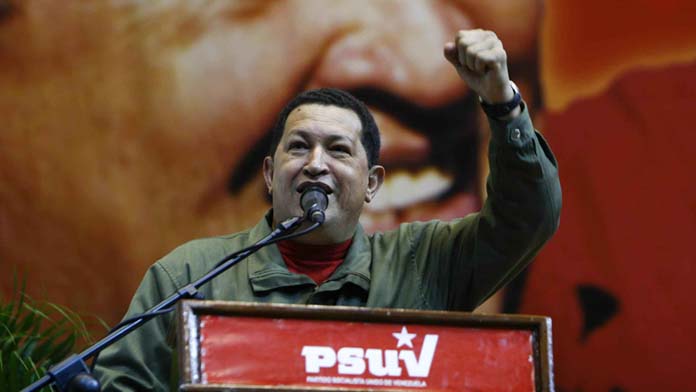
The United Socialist Party of Venezuela (PSUV), which Chavez set up in 2006, brought together the left, unions and social movements. But it was modelled on the Communist Party of Cuba, which is a transmission belt for orders from the top.
Many called the new breed of state officials, and those who profited from state contracts, the “Bolivarian bourgeoisie”.
The new “bourgeoisie” included large sections of the armed forces, which control key sectors of the economy.
Today the acting president Delcy Rodriguez hopes to work with the Trump administration to protect the position of the bureaucrats. She represents some of the worst of what the Bolivarian Revolution degenerated into.
Republished from Socialist Worker UK