

The Reserve Bank (RBA) pushed interest rates back up in February, as workers face a new cost-of-living shock.
Maddeningly, it said the move was, in part, a response to people spending too much and driving up inflation. But many people are still struggling with the cost of living, not going on a spending binge.
The RBA expects inflation to keep rising, saying it will hit 4.2 per cent later this year.
Its answer is to smash living standards, putting up rates to make people pay more on their home loans and credit card debts. Two more interest rate rises are likely this year, according to financial markets.
The Bank also wants to push more people out of work, claiming that the unemployment rate in December of 4.1 per cent is too low. It thinks unemployment of at least 4.5 per cent will help reduce inflation.
Workers are already falling further behind cost-of-living increases.
After two years where wages finally started to gain ground again after the horror period of high inflation following the pandemic, wages are going backwards again.
There was a sharp decline in real wages between July and September last year, wiping out almost all the gains workers made in the previous year.
Wages are now back to 2011 levels after inflation is factored in and won’t start rising again until 2027, according to RBA estimates.
Labor’s Budget
Big business and pro-market economists have responded by demanding further attacks on workers.
In the Financial Review John Kehoe demanded “serious, overdue action from Canberra and our state governments on productivity-boosting policies and fiscal discipline”.
In other words they want cuts to government spending and ways to make us work harder.
Reserve Bank Governor Michele Bullock has backed the push from business on productivity, saying inflation was due to underlying weaknesses in the economy and that, “Years of weak to no productivity growth is a big part of that story.”
Business lobby group the Australian Chamber of Commerce and Industry has called for $50 billion a year worth of federal budget cuts.
They point to a modest increase in government spending since Labor came to power, claiming this is driving inflation. The Reserve Bank, however, has pointed to consumer spending and business investment in data centres for AI as mainly responsible.
Labor Treasurer Jim Chalmers is open to business demands. He told ABC’s Insiders that productivity measures and spending cuts would be major elements of the budget in May.
There are also rumours that Labor will finally take a small step to unwind the tax handouts for housing investors that have produced surging house prices.
Treasurer Jim Chalmers is reportedly considering changes in the budget to reduce the 50 per cent discount on capital gains tax paid on profits in housing investment.
This allows investors who hold housing properties for 12 months to avoid a huge amount in tax, costing the government $32 billion each year.
This overwhelmingly benefits the rich. The top 10 per cent of income earners take 82 per cent of the benefits, a Parliamentary Budget Office review reported this month. The top 1 per cent, those earning at least $363,000 a year, receive 60 per cent.
But don’t expect Labor to take the action that’s needed. On their own, the changes they are considering would not significantly reduce housing prices. A reduction in the capital gains tax discount from 50 to 33 per cent would only produce a 1.5-2 per cent drop in prices, conservative economist Chris Richardson says.
Labor’s failure on living standards will fuel the rise of One Nation, who will blame immigration for housing costs and price rises.
But it’s capitalism and the rich who are really responsible.
Whenever the economy runs into problems their solution is always to make workers pay, whether through cuts to wages or public spending, productivity measures or higher mortgage rates. Bosses’ profits are never on the chopping block.
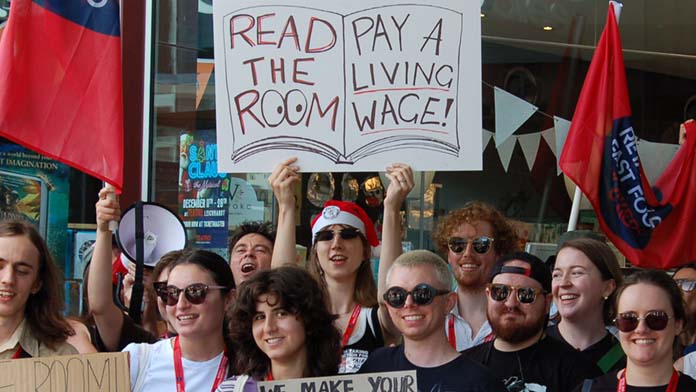
We need to force business to pay through a fightback for higher wages.
Some union leaders are talking about the need for this. But unions have too often failed to seize on the anger over the cost of living to lead a serious fight.
The Electrical Trades Union in NSW plans to demand 6 per cent a year wage rises from electrical contractors. The Transport Workers Union has lined up 200 agreements to expire by the middle of the year, including at Qantas, Virgin, Toll and Linfox, to increase its power in wage bargaining.
We need to seize on every opportunity to fight for wages to put an end to the cost-of-living pain—and reject the racist idea that migrants are to blame.
By James Supple