
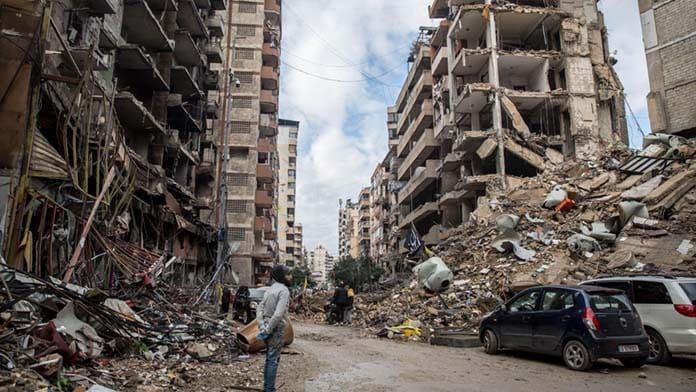
The ceasefire in Lebanon was scarcely hours old before Israel launched fresh attacks, firing into the southern Lebanese town of Markaba, wounding two people. Israel also shelled the villages of Taybah and Khiam.
To drive home the point, Israeli Prime Minister Benjamin Netanyahu told a far-right Israeli TV station that the ceasefire did not mean an end to the war.
With Donald Trump taking office on 20 January, Netanyahu is confident that he has even stronger US backing as Israel wages war on four fronts—Lebanon, Gaza, the West Bank and Syria.
While the 1.2 million Lebanese driven from their homes by Israeli terror will hope to be able to return, the ceasefire marks a setback for those looking to an Iranian-backed “Axis of resistance” linking Hezbollah and Hamas.
Hezbollah had previously said it would stop its attacks on Israel only once a ceasefire had been agreed in Gaza. Now it is withdrawing its forces 30 kilometres north from the Israeli border, beyond the Litani river, having failed to repel the Israeli ground invasion.
The largely ineffective Lebanese army will patrol southern Lebanon, giving Israel the buffer zone it has been demanding.
Meanwhile the deal gives Israel fully 60 days to pull back its troops. Talks on a permanent border will allow Israel to try to steal Lebanese territory.
Netanyahu boasted that the ceasefire will free up troops to threaten Iran and to continue the grinding genocide in Gaza.
And he got a bonus from the deal, with France (a party to the ceasefire) saying it would not necessarily enforce the arrest warrant issued against him by the International Criminal Court.
Displaced people
In Gaza, the horror continues. Israeli strikes killed at least 40 Palestinians, many of them in the Nuseirat refugee camp. Further attacks killed 15 people, some in a school housing displaced people.
Natalie Boucly, an official with the UNRWA aid agency, said, “Gaza has become uninhabitable … basically the entire population of Gaza are in desperate need of assistance amid a looming famine.”
Two million refugees are living in tents flooded by sewage or winter rains. A woman lamented, “I’m left with nothing. I look at my children, call to heaven and say, ‘Good, enough. It’s better to die from a missile’.”
There is open discussion in Israeli ruling circles of seizing northern Gaza outright. Far-right finance minister Bezalel Smotrich said, “We can and must conquer the Gaza Strip. We should not be afraid of that word.”
Giora Eiland, a former head of the Israeli National Security Council, has defended what has been dubbed the Generals’ Plan—to depopulate and seize the north of the strip.
He wrote in the Israeli paper Haaretz, “Since it is allowed to conquer territory in war, the question is how this should be done.
“One possibility is to do it in territory where hundreds of thousands of civilians are present. The inevitable result will be a high number of innocent people killed.
“The other possibility is to act first to make sure there are no civilians there.”
This explains why the Netanyahu government has starved northern Gaza of supplies.
Even if Israel does not annex parts of the strip outright, it seems set to maintain military rule.
Tamir Hayman, a former head of Israeli Military Intelligence, has written that the IDF will slice up Gaza and use the occupied zones for raids into areas where Hamas continues to organise.
Picking olives
Israel claims its attacks on Gaza are justified by the influence of Hamas. But it has been stepping up its harassment of Palestinians in the West Bank, which is ruled by the Palestinian Authority.
According to the United Nations Office for the Coordination of Humanitarian Affairs, Israel killed 719 Palestinians including 163 children in the West Bank and East Jerusalem between 7 October 2023 and 6 October 2024.
Israeli soldiers stand by while Israeli settlers harass Palestinian villagers. At least 15 Palestinian farmers picking olives were injured between 30 September and 6 October.
In early November, masked settlers set fire to 17 cars in the Palestinian city of El Bireh, near Ramallah. They spray-painted the words “For Judea and Samaria—War”, using the Zionist term for the West Bank.
Backed by the US and its allies, including Australia, the Netanyahu government is intent on its agenda of ethnic cleansing. Ceasefire deals are unlikely to be more than pauses in the horror.
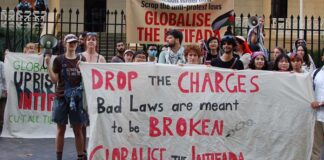
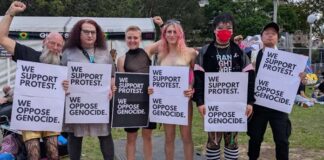
We need to step up efforts to build solidarity with Palestine here while looking to those with the real power to bring the horror to an end—the Arab working class.
By David Glanz