

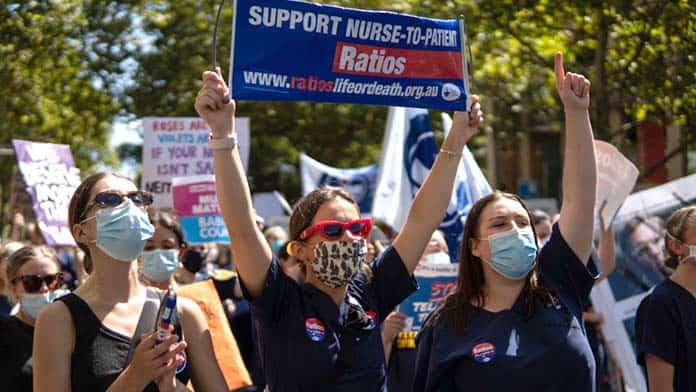
NSW Labor leader Chris Minns has announced plans for new safe staffing levels in hospitals if he wins next year’s state election. But the promise falls short of the demands of the NSW Nurses and Midwives Association for legislated nurse to patient ratios.
Labor has agreed to the union’s demand to improve ratios in some departments, starting with 1:3 in emergency next year then rolling out later in ICUs, maternity wards and multipurpose services.
The nurses’ union General Secretary Shaye Candish said that, “What NSW Labor has put on the table would go a long way towards repairing the broken staffing system we have in NSW”.
But she added that, “There are a number of specialties we have no commitments for.”
These include paediatric departments, neo-natal intensive care units and mental health, and the demand for babies to be counted in patient numbers.
The largest major city hospitals would have ratios of 1:4 in wards during day shifts, with an additional nurse in charge of each shift, but this has not been guaranteed at secondary hospitals including Blacktown, Campbelltown and Sutherland or for regional hospitals.
The nurses’ union has also been calling for ratios to be legislated, so hospital managements are compelled to enforce them. Labor has only committed to including the changes in the nurses’ Award.
Worryingly, Minns has also refused to call Labor’s promises a commitment to nurse to patient ratios per shift, preferring to call them “safe staffing levels on a shift-by-shift basis”. This indicates he may be prepared to give hospital managements some leeway in meeting the targets.
The nurses’ union officials have put their faith in a campaign targeted at elected a Labor government. They appeared alongside Labor MPs to launch the new policy and have trumpeted it as a step forward. But they also admit that it means the fight for the nurse to patient ratios needed will have to continue.
Instead of waiting for the election, a campaign of escalating industrial action, including more and longer strikes as well as public sector wide stopwork actions is needed. This could build real pressure to force both the NSW Liberal government as well as Labor to finally act on the crisis in our health system.