
Trump’s openly imperialist grab for resources and profits in Venezuela and elsewhere is a product of capitalist competition and the US’s declining position, argues Jack Stubley
The US’s kidnapping of Venezuelan President Nicolas Maduro and its declaration of control over Venezuela sent a dramatic signal to the rest of the world about Trump’s willingness to use naked force to advance US power and profits.
On the one hand, it is a conscious reversion to the Monroe doctrine from 1823 that declared the Western hemisphere, comprising North and South America, a sphere of influence under the sole domain of the US. On the other hand, it demonstrates the continuing imperialist competition between the US and China.
Trump’s enthusiastic revival of the Monroe doctrine was revealed in the administration’s new National Security Strategy for US foreign policy released in December.
This explicitly asserts the US’s need for strategic control of the Americas to combat “hostile foreign incursion or ownership of key assets”. In other words, to counteract the growth of Chinese influence and power.
This is evident in Washington’s open policy goals to “make every effort to push out foreign companies that build infrastructure in the region”, meaning China and its recent emergence as South America’s biggest trading partner.
US sanctions imposed from 2017 pushed Venezuela’s government to seek support from China and Russia for its own survival.
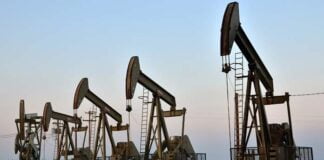
Venezuela has some of the world’s largest known oil reserves, and Trump has declared US control of them as a central reason for the intervention. This is likely misguided with global oil prices already too low for the investment needed there to be attractive to the big US oil companies.
However, the dramatic military strike demonstrated to other states in the region the US is willing to resort to force to secure resources and deals for US corporations.
Now Trump is demanding control of Greenland, and trying to bully Denmark and the other European states to agree to its sale.
This is another example of Trump’s imperialist drive to grab control over resources and secure profits for US companies. Greenland has deposits of 43 of 50 of the world’s “critical minerals” for energy technologies and production of computer chips. It also sits in an important military location controlling access to the Arctic.
Although the US already has a military base in Greenland, and virtually unlimited rights to build more bases under an existing treaty, Trump has been willing to jeopardise NATO in his aggressive threats and bids for ownership.
While on one level Trump’s obsession with Greenland seems bizarre, the imperialist impulse behind using tariffs and threats of force to secure US economic advantages is clear.
Trump is threatening to reimpose US control over the Panama Canal for the same reasons, seeing the waterway as crucial to the US strategy of regional dominance.
US Ambassador Dorothy Shea has claimed that China’s influence over “critical infrastructure and port operations” there is a “threat to global trade and security”.
The brazen US attack on Venezuela showed contempt for of any notion of international law.
Trump’s use of bullying and force threatens the so-called “rules based order” that has been in place since the Second World War.
This was intended to restrict the use of military power to self-defence, and prevent states from launching wars of conquest and aggression. This state of affairs suited the US as the world’s premier economic and military power, but the US was also willing to break those rules whenever it saw it as necessary.
History of US intervention
Trump’s attack on Venezuela is also only the latest example of a long history of violent US intervention in Latin America.
Ever since the emergence of the US on the world stage as an imperialist power it has treated Latin America as its own “backyard”. This domination has meant ruthless exploitation for cheap resources, labour, as well as frequent political or military intervention to secure US interests.
The US has always been willing to unleash brutal force to advance its power and profits without any concern for the so called “rules based order”.
In Guatemala, the US-owned United Fruit Company profited from banana plantations and owned 40 per cent of the land.
This was threatened when a democratically elected government pursued mild reforms of trade union rights, alongside moderate land taxation and redistribution. In 1954, as a response, the CIA directed a paramilitary coup which led to four decades of dictatorship and state terror.
The Dominican Republic has been subject to repeated interventions. The US military occupied the country from 1914-1926 and subsequently backed the brutal dictatorship of Rafael Trujillo.
When Trujillo became a liability, the US had him assassinated in 1961.
Dominicans then elected the social democratic Juan Emilio Bosch. This was unacceptable to the Dominican ruling class who led a coup.
Large scale resistance threatened to defeat the coup until the US intervened with over 40,000 troops. The US re-occupied the country and oversaw both the installation of a former Trujillo official as the provisional president and another Trujillo official’s election to presidency.
In Chile in 1973 the US backed General Pinochet’s military coup that overthrew the government of President Salvador Allende and killed tens of thousands.
It followed several years of covert US actions designed to encourage business leaders to sabotage the economy and stir up military opposition to Allende.
This was in the context of not only Allende’s reforms but workers’ strikes and mobilisations that led them to form “cordones” that began to take control of production.
The coup was therefore not only about Allende’s agenda of nationalisation, land reform and social welfare expansion, but about crushing organised working class and peasant power. Pinochet’s government quickly became synonymous with state terror.
More recently, Honduran President Manuel Zelaya defied the US by exploring alliances with the left wing governments of Bolivia and Venezuela, alongside raising minimum wage and holding an unofficial referendum to democratise the constitution.
In 2009 the Honduran military staged a coup to remove Zelaya and, despite massive protests, received tens of millions of dollars as well as support for sham elections from the US State department under Hillary Clinton.
After the fall of the Soviet Union, the US dominated the world almost unchallenged.
It exercised military pre-eminence through a system of alliances with other powerful states such as Europe, Japan and South Korea, and dominated the world economically through the primacy of the US dollar alongside institutions like the IMF and World Bank.
China’s rise has called this into question and challenged the US’s economic position. It is out-competing US companies and attempting to establish control of high-tech sectors like communications, electric vehicles and renewable energy. The limits of US military power have also been exposed by its failures in Afghanistan and Iraq.
In the past, the US combined the use of its economic power with claims to be defending democracy and human rights, often operating through proxies in order to distance itself from foreign interventions while still obtaining its goals.
What is different about Trump’s efforts today at military strong-arming both enemies and allies is that the US is now asserting primarily militarily what it can no longer assert economically.
When the US designed the rules-based order it was able to dominate the world economically as a product of the size and competitiveness of its economy.
This is no longer the case. So Washington not only wants to secure access to Greenland’s minerals, Venezuelan oil, or the Panama Canal, but just as importantly it wants to exclude its competitor, China.
Imperialism today
Trump’s actions demonstrate the way capitalism produces imperialism and war, and the continued relevance of the Marxist theory of imperialism, first theorised by the Russian revolutionaries Lenin and Bukharin over a hundred years ago.
Competition on the capitalist world market today is dominated by a small number of enormous multinationals in each sector.
These companies dominate their national economies, and therefore the foreign policy of the nation-state they reside within. Multinationals compete with those based in different nations over resources, investments, and access to profitable foreign markets.
The relative strength of national economies changes over time, as in the case of China’s ascent and the US’s relative decline. This is behind the current US policy shift to more openly rely on military strength for economic advantage.
As Bukharin put it the “struggle of the economies against each other, a war of capitalist competition”, is “reinforced by the threats of military power”.
So Trump wants to use military muscle to loot resources and impose deals that improve the position of US companies. China and other rivals are in turn forced to build up their own military forces to make sure they can’t simply be pushed around.
This has produced climbing global military spending, particularly in China, the EU and Australia. Already, the NATO secretary general has warned Europeans “we must be prepared for the scale of war our grandparents or great-grandparents endured”.
Trump’s foreign policy reorientation towards the Americas and intervention in Venezuela demonstrates that while the relative economic strength of the US wanes its military power remains a formidable way of combating China’s influence.
Albanese has shown the position of the Australian ruling class, remaining silent on Trump’s aggression in the Western hemisphere, even giving tacit support to the Venezuela intervention through advocating a “democratic, peaceful transition”. Similarly, UK Prime Minister Keir Starmer supported deposing Maduro, despite crocodile tears over possible international law violations.
It is the working class that is sent to fight and die in wars, and the working class that is forced to bear the inevitable economic costs.
We need to build working class opposition here to oppose Albanese’s support for Trump, and to the imperialist competition behind it.