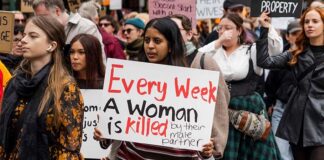

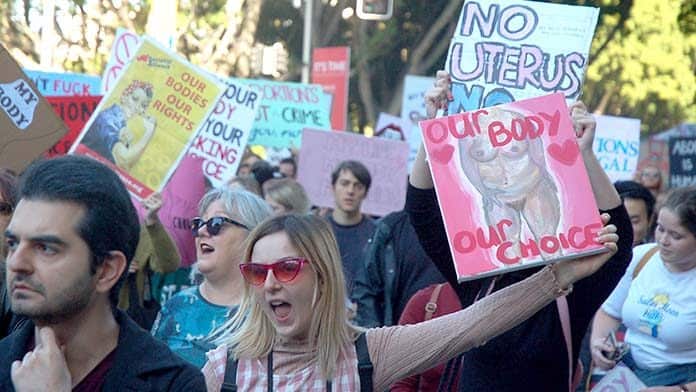
One Nation has joined forces with other bigots to attack abortion.
In June, there were anti-abortion proposals raised in three Australian parliaments. In Queensland, Katter’s Australian Party unsuccessfully attempted to prevent nurses and midwives from prescribing abortion pills.
In South Australia Family First MP Sarah Game introduced a bill to effectively ban abortion from 25 weeks except when necessary to save a mother’s life. It succeeded in the upper house due to One Nation’s newly elected MPs. While the lower house overwhelmingly defeated it, both Labor Premier Peter Malinauskas and the Liberal Opposition leader voted for it.
In NSW, Libertarian MP John Ruddick wants to outlaw sex-selection abortions, using racism to link the almost non-existent practice to migrant communities. One Nation MP Barnaby Joyce spoke at a rally supporting him.
How much of a threat is this?
An opinion poll in March showed that 62 per cent in Australia support access to abortion unequivocally (including half of One Nation supporters) and a further 25 per cent support access in limited circumstances. But anti-abortion groups, supported by wealthy religious organisations like the Australian Christian Lobby (ACL) and the Catholic Church, campaign unrelentingly against abortion. They aim to chip away at current liberalised abortion laws and to prevent any extension of access.
One Nation’s sexism mirrors other far right parties, who promote traditional family values and a return to state and church control of women’s fertility.
The Australian ruling class and state are more conflicted. The capitalist class benefits economically from the labour of women workers, and the government has conceded partial moves toward workplace equality and abortion rights over the past few decades as women became a permanent part of the workforce and fought for equal pay and legal rights. However, sexism also divides and weakens working class gains, and governments and bosses are content to undermine equality and accept the unpaid domestic work of women caring for children and other non-working family members.
For the moment it is highly unlikely parliaments will vote to ban pregnancy terminations. But a bigger One Nation would mean a more organised far right that keeps pushing on the issue.
In the 1990s Hanson appeared to be pro-abortion, and One Nation only adopted anti-abortion policy in 2020. In the context of overwhelming public support for abortion rights, One Nation is unlikely to win votes on the issue. Its polling declined after Hanson’s Press Club speech where she proposed restricting abortion and opposed maternity leave and child care services.
But abortion is a touchstone issue for the far right and some of the activists and supporters she wants to attract, including those influenced by Trump. A number of One Nation’s high profile defectors from the Coalition are anti-abortion, including Cory Bernardi, Bernie Finn and Barnaby Joyce.
There remains a strong tradition among sections of the Australian Labor Party, the Greens and unions to defend abortion rights. South Australia Unions and Queensland Council of Unions opposed the recent anti-abortion attacks in those states. The ACTU is promoting campaigns at work to win reproductive healthcare leave, including abortion care.
It is estimated that between one quarter and one third of Australian women will experience an abortion in their lifetime. These statistics did not change with decriminalisation of abortion law. The pro-choice struggles of the 1970s won liberal interpretations of the laws that enabled most women to access abortion, safely. Decriminalisation has brought greater legal rights but problems of access remain. Pro-choice activists must remain vigilant against the renewed threat from anti-abortion campaigners and the far right.
By Judy McVey