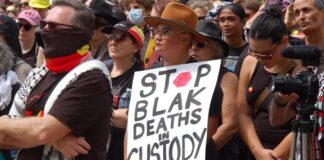

Aboriginal people at Borroloola and the surrounding Gulf region in the Northern Territory have stepped up protests against Glencore Xstrata’s MacArthur River Mine (MRM), the largest open cut lead and zinc mine in the world. Local communities have relied on the river system for their livelihood for countless generations.
On 22 October, clans from across the region marched to a community meeting to hear results from an Independent Monitor report on the environmental impact of the mine. This followed a major action the previous week, which blocked a bridge crossing the MacArthur River and pledged ongoing civil disobedience if demands for a moratorium on resource extraction in the region were not met.
The Independent Monitor’s report confirmed community fears. The mine has caused extensive heavy metal contamination of fish and waterways. Gaps in the mine’s monitoring systems mean that adult and edible fish species are not regularly tested. The extent of bioaccumulation of lead and cadmium and impacts on human health remain unknown.
A thick sulphur dioxide smoke plume has been hovering above the mine for over six months, produced by reactive chemistry in its waste rock dump. Attempts to smother it with a clay capping have failed, and will result in acid metalliferous drainage into the river system.
The NT Department of Mines and Energy has failed to prosecute MRM for a single breach of its operating conditions, despite many of the problems having existed since 2008.
Disgracefully, vital services in Borroloola rely on funding from the mine, such as the dialysis unit, and MRM has fuelled rumours these services would be withdrawn if the mine closed. Yet the $32 million of mining revenue flagged for a “Community Benefits Trust” over the mine’s life pales in comparison to $100 million in electricity subsidies alone provided to the mine by the NT Government.
The “viability” of Aboriginal communities right across remote Australia is being made reliant on the existence of destructive commercial projects. In November, the WA government announced their intention to close down 150 Aboriginal communities branded “unviable”.
NT Chief Minister Adam Giles has launched a “developing the North” economic strategy that ties the survival of Aboriginal communities to an expansion in resource projects, particularly shale gas.
Gudanji man Asman Rory, Traditional Owner for the MRM site, summed up the community’s feelings: “NT Chief Minister says our land is open for business—but our business is protecting the land, and that is exactly what we are going to do.”
By Lauren Mellor