

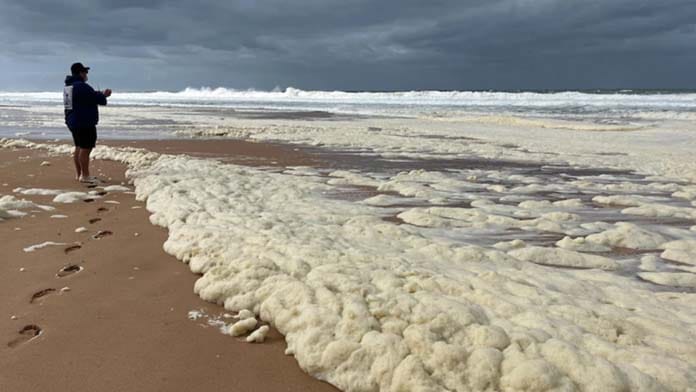
A toxic algal bloom twice the size of the ACT is causing apocalyptic scenes in South Australia. Since March, the algal bloom is estimated to have killed almost 14,000 marine animals from more than 400 species. Reports describe beaches covered in brown foam, clumps of seaweed and rotting fish.
While the federal and state governments have announced a combined $28 million to deal with the impacts, federal Labor Environment Minister Murray Watt stopped short of declaring it a natural disaster. And no meaningful action will be taken to deal with the causes of this catastrophe.
This is a disaster fuelled by the climate crisis. The algal bloom is caused by a species known as Karenia mikimotoi, which occurs naturally. When the species is present in massive amounts like it is now, it effectively drowns marine animals.
The amount of algae off the coast of SA has exploded thanks to a combination of climate-related incidents. Flooding in 2022-23 saw run-off from rivers enter the ocean. This was followed by cold upswelling which caused nutrient rich water to come to the surface. Most recently, a marine heatwave has seen temperatures skyrocket by 2.5 degrees above normal.
These events, and the toxic algal bloom that has come from them, are a reminder of the climate inaction that has defined Albanese’s Labor government. The wide-reaching roots of this crisis also mean that it’s unlikely to go away any time soon. Early modelling suggests that while the algal bloom might get smaller over winter it’s likely to spread even further over the summer.
A report released by the Biodiversity Council claims that this marine heatwave is “likely to be equivalent in wildlife impacts” to the horrific Black Summer bushfires which killed three billion animals in 2019 and 2020. The same conditions are causing an algal bloom in California in the US right now.
These algal blooms are the symptoms of a sick system. What’s needed is urgent action to deal with the roots of this crisis. Albanese’s Labor government must act to stop the expansion of fossil fuels if there is to be any hope of dealing with this type of environmental breakdown.
By Angus Dermody