

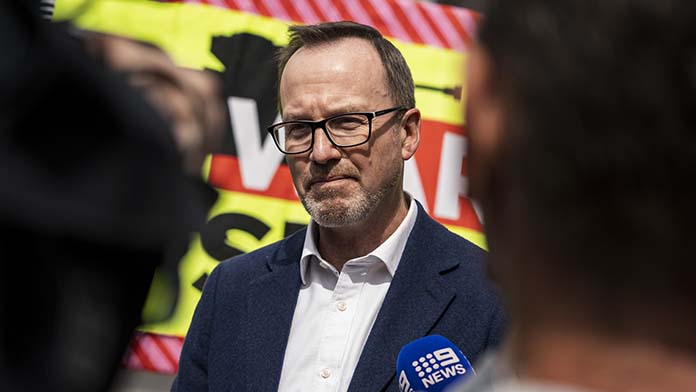
The Greens’ party room has elected David Shoebridge leader after Larissa Waters stepped down for health reasons.
The vote for Shoebridge and the close runner-up, Mehreen Faruqi, represented frustration with the party’s opinion poll numbers flatlining around 12 per cent under Waters and a desire for a more combative style.Significantly, the most conservative candidate, Sarah Hanson-Young, could persuade just one MP to back her.
The Greens have stood still while One Nation has benefited from widescale anger and contempt for Labor and the Coalition.
Shoebridge is aiming to emulate Zohran Mamdani in New York and Zack Polanski of the Greens in Britain, both of whom have picked up support with assertive, left reformist policies.
There is no doubt that Shoebridge will give the Greens a harder edge. His elevation to the leadership will also boost two of his signature campaigns—to scrap the AUKUS military pact and to oppose giant AI data centres.
But his nationalism means that his calls for dumping the nuclear-powered submarine program are combined with a willingness to spend on weapons of war in the name of “national defence”.
He announced in the run-up to the May 2025 election that the Greens were committing for the first time to military spending—$4 billion on items such as drones, unmanned underwater marine craft and short and medium-range “defensive” missiles.
Despite the change in leadership, the Greens still face two major hurdles. Many see the Greens as part of the political establishment, given their alliance with the Gillard Labor government and their continuing focus on getting outcomes in parliament through negotiating with Labor.
Shoebridge declared that he aimed to replace Labor, not prod it leftwards. But the logic of parliamentary politics means the Greens will be under pressure to use their numbers in the senate to amend and support Labor bills.
In addition, the Greens are seen as middle class. While some Greens are active in their unions, the party does not acknowledge the central strategic importance of class struggle. The party dismisses unions as just one of many players in civil society.
If Shoebridge helps tilt the electoral balance against One Nation, that will be welcome.
But a real fight against racism, poverty and war must involve struggle in workplaces and campuses, and movements on the streets.
To get that, we need to build a left alternative that understands that our power to fight for change is outside parliament.
By David Glanz