
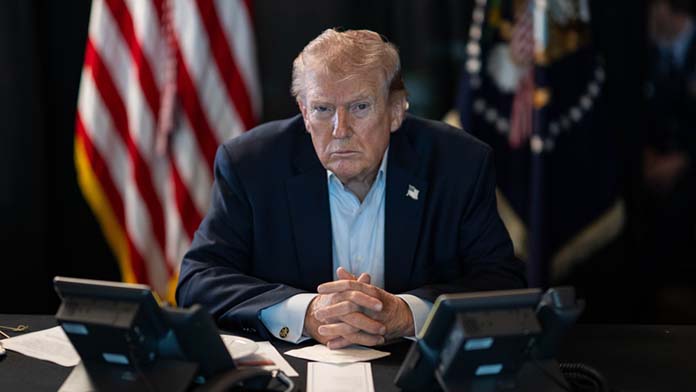
Donald Trump lashed at out Israeli Prime Minister Benjamin Netanyahu in a call in early June, calling him “fucking crazy” and telling him “everybody hates Israel”.
This came after Iran broke off negotiations with the US in response to Israel ramping up its war in Lebanon.
A week later Netanyahu defied Trump by bombing Beirut. Iran responded by firing missiles at Israel, before Trump again intervened following an Israeli strike on Iran to stop further attacks.
For months Trump has been promising a deal with Iran was imminent. He raised expectations by skipping his son Donald Junior’s wedding in the Bahamas, saying he needed to stay in Washington because of “a thing called Iran”. But nothing resulted.
Instead there have been renewed exchanges of missiles, with the US bombing military sites near the Strait of Hormuz and Iranian ships. Iran has attacked US bases across the region including in Bahrain, Kuwait and Jordan.
There were hints that an interim deal to extend the ceasefire and provide time for fuller negotiations was imminent, where Iran would reopen the Strait of Hormuz and give undertakings about its nuclear program in exchange for some kind of sanctions relief. Then it evaporated.
Trump needs a deal that will see Iran re-open the Strait of Hormuz. About 14 per cent of global oil supplies have been blocked by its closure.
The economic impact of this has been less apocalyptic so far than predicted. Global oil prices are up, but nowhere near the figure of $US150 a barrel some feared.
The oil market has temporarily adjusted, with stockpiles of oil run down, China cutting back on oil imports and producers like the US and Canada significantly increasing exports. But a crunch will come at some point in the next few months if the Strait is not reopened.
The current price hikes are already adding to anger about the cost of living. Prices at the petrol pump in the US may not be as high as in 2022 following Russia’s invasion of Ukraine, but are up 40 per cent since the war began.
This has seen Trump’s support crash to its lowest ever level, with just 38 per cent approving his performance.
Concessions
Yet Trump seems to be unwilling to swallow the need for concessions to Iran. Although he blusters about the war being a massive success, the reality is the US has failed to force Iran into submission.
None of the aims Trump set himself in the war have been achieved and Iran now has a stronger position in negotiations than before it started. Its ability to close the Strait of Hormuz gives it a powerful economic weapon—and the US is unable to reopen it by force.
Trump’s last hope is that his own blockade of Iranian oil exports will force the Iranian government to fold. In the two months since it started, Iran has lost about $6 billion.
So there is now a contest over which side can bear the economic damage resulting from the closure of the Strait for the longest.
Israel’s wars
Israel’s aggressive militarism means it opposes any deal that gives ground to the Iranian government and would prefer to resume bombing.
Its war in Lebanon has also undermined Trump’s negotiations. The initial ceasefire deal in April was supposed to include a halt to fighting in Lebanon as well.
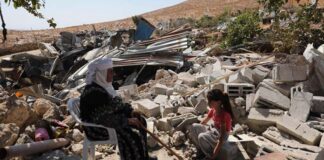
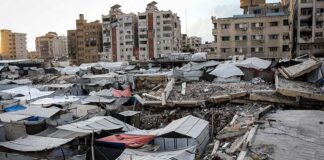
Instead Israel has expanded its invasion, occupying one fifth of the country and forcing 1.4 million people, a quarter of the population, to flee their homes.
It bombed three hospitals in a week in southern Lebanon just before we went to press.
Israel is continuing the killing in Gaza too, murdering another 119 people in May. Netanyahu says he has told the military to seize 70 per cent of Gaza, pushing further beyond the 52 per cent of the territory it was supposed to control under the ceasefire.
This means forcing the population into an ever smaller area in unlivable conditions.
His Defence Minister Israel Katz has also confirmed Israel’s aim to ethnically cleanse Palestinians from Gaza eventually through “voluntary migration”.
But the US is still calling the shots. Israel halted its bombing of Iran when the US insisted it was time for negotiations. And Trump also wants a ceasefire in Lebanon too.
Yet in typically erratic style his administration drew up a one-sided ceasefire plan between Israel and the collaborationist Lebanese government declaring that Hezbollah had to agree to Israel’s demands to retreat beyond the Litani River.
Hezbollah was excluded from negotiations and refused to accept this.
This kind of double-dealing will only fuel Iran’s distrust of the US—and the reluctance to compromise on any deal.
By James Supple