
Jean Parker looks at how the first Mardi Gras led to a campaign that won the right to march, as well as victories for LGBTIQ+ rights
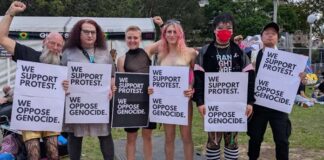
When genocidal war criminal Israeli President Isaac Herzog was escorted through the streets of Sydney, the Minns Labor government banned street marches and unleashed indiscriminate police violence in an effort to suppress the Palestine movement.
In the aftermath the movement is asking how we can win justice for those brutalised and arrested, and how to defend civil liberties in order to build the movement in solidarity with Palestine. The lessons from the movement born out of the violent repression of the first gay and lesbian Mardi Gras in June 1978 are more relevant than ever.
The Sydney Mardi Gras has grown into a massive corporate tourist event but its origin was in the struggle for gay liberation that was built by the radical left in the 1970s. The movement was led by socialists who saw the oppression of homosexuals, gender non-conforming people, and women as fundamental to the capitalist institution of the nuclear family.
They organised under the banner of “gay liberation” (the term gay at the time encompassed a broad struggle for sexual and gender freedom) echoing the struggle of the National Liberation Front that led armed resistance to US imperialism in Vietnam.
International solidarity was at the heart of the radicalisation of the 1960s and 1970s. In fact the first Mardi Gras was organised after Ken Davis—a young gay Trotskyist at the University of Sydney—responded to a letter from San Francisco gay and lesbian socialists calling for international action on the anniversary of the Stonewall riot in 1969, as a way to build international solidarity against the upsurge of the Christian Right in California.
Ken and others organised a march of 500 people on Saturday 24 June, followed by a public meeting in the afternoon. They also organised an evening street celebration—a Mardi Gras—where LGBTIQ+ people could come out in costumes under the cover of darkness and express themselves without being photographed and “outed”.
Starting with 200 people at Taylor Square at 10.30pm, the Mardi Gras marched down through the emerging gay bar strip behind a ute blaring music. They chanted “Out of the bars and onto the streets”. This call worked, and by the time people approached Oxford Street near Hyde Park the parade had swelled to around 2000.
Under the NSW Summary Offences Act (1970) protesters had to ask for a permit from police to march on the streets.
Lance Gowland (a member of the Communist Party of Australia) had sought and been granted a police permit to parade from Taylor Square to Hyde Park. But as the numbers swelled, police revoked the permit and pushed the crowd down Oxford Street to prevent a growing street party.
Cops then seized the truck and PA and detained Gowland, the driver. This enraged the participants and unleashed an exhilarating and rebellious mood of defiance.
Rebellion
As police blocked the entrance to Hyde Park, someone on the megaphone called “to the Cross” and the crowd marched up towards Kings Cross, which was both the historical centre of the LGBTIQ+ community and also the notoriously brutal and corrupt Darlinghurst police.
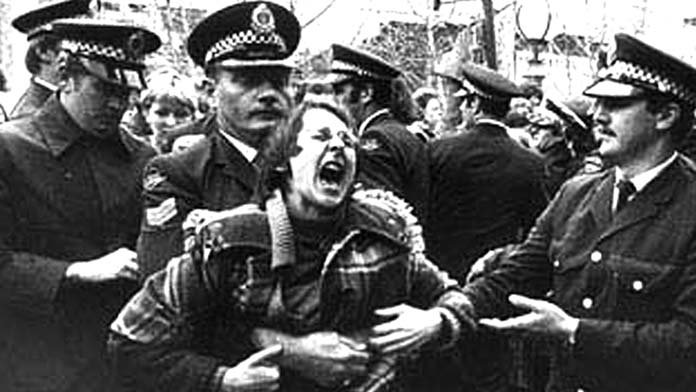
From a celebration, the event had turned into a rebellious and angry protest with people chanting, “Stop police attacks, on gays, women and blacks!” In the Cross more people joined in. But the police had trapped the Mardi Gras–kettling participants on all sides and shining their headlights on them with endless police wagons waiting down every alley.
Just like in the Stonewall riot in New York in 1969, this became a watershed moment of resistance, of shaking off the shame and fear of homophobia—an intifada. Lesbians, gays, trans people, sex workers and others fought back—successfully de-arresting many people from the back of police cars.
Onlookers threw bins of rubbish at the cops from surrounding windows. Police were completely unprepared for the spirit of defiance from some of society’s most oppressed and outcast. Eventually 53 people were arrested, most taken to the brutal and corrupt Darlinghurst police station.
Even then the protest didn’t stop, as people marched to the police station and stayed on the street all night demanding the release of those arrested and organising bail and medical support. Inside some protesters were savagely beaten with cops inflicting life-changing injuries, while others were denied legal and medical support.
The following Monday 26 June, the Sydney Morning Herald published the names, ages and addresses of the 53 arrestees. Teachers were sacked—it was then illegal to teach in any school as a homosexual—others were thrown out of rental properties and cut off from their families. Lesbian mothers lost custody of their children. Some people later committed suicide.
But the defiance experienced in the Mardi Gras had been a turning point. Rather than driving the movement back into the closet and off the streets, the repression only galvanised it.
Two days after the Mardi Gras police blockaded the Liverpool Street Courthouse to stop protesters entering to observe the hearings of those arrested. In response 300 protested and seven were arrested.
A mass meeting was called for a week later to organise a “drop the charges” campaign. Organisers contacted civil liberties groups and unions.
On 15 July, only three weeks after the Mardi Gras assaults, 2000 people retraced the route of the Mardi Gras—the biggest LGBTIQ+ protest in Australian history to that point. Chants of “Gay rights now!” and “Stop police attacks, on gays, women and Blacks” again rang out. Another 14 people were arrested.
The “drop the charges” campaign held weekly meetings of 60-80 people in the Tin Sheds gallery at Sydney University and the CAMP rooms in Glebe. Activists drew in allies from unions, progressive churches and the ALP, even with an ALP State Government in power. The Redfern Legal Centre and the NSW Council for Civil Liberties fought to defend all those arrested.
The Fourth Homosexual Conference was held in Paddington Town Hall on 25-27 August. Reactionary Christian Democrat Fred Nile organised an anti-homosexual, anti-abortion “Festival of Light” rally at Hyde Park.
The Homosexual Conference plenary voted to march to confront the bigots, without a police permit. Chanting “Get your laws off our bodies” and “Not the Church, not the State, Women must decide our fate” 300 marched, with linked arms, to Hyde Park. There were 104 people arrested when police again kettled protesters at Taylor Square.
By the end of 1978 a further 125 people had been arrested protesting against the attack on the Mardi Gras, taking the total to 178. But the militancy and unity had put gay rights and civil liberties onto the mainstream agenda. Most of the charges were dropped and the police “lost” many other files.
Winning the right to march
The repression had backfired. Probably the biggest victory from the whole campaign came in May 1979 when the NSW Summary Offences Act (1970) was repealed. This law had supressed street protests on every issue, so its repeal was a major win for the right to protest and march in NSW.
It had also been the law that was used to target Aboriginal people on the street, sex workers, displays of same-sex affection and to allow police to entrap gay men in beats.
The repeal of the Act led to the right we have in NSW to march, giving seven days’ notice to police (via a Form 1) to exempt ourselves from traffic infringements. If the police want to stop a march they have to take us to the Supreme Court. This replaced the need to apply to police for permission to march.
The Public Assembly Restriction Declaration (PARD) that Chris Minns rushed through parliament after the Bondi killings was the first time since 1979 the rights won through the Mardi Gras were suspended.
Our defiance, pushing for a mass march against Herzog and many thousands marching on the night, has seen off the PARD this time. But the lesson of the Mardi Gras is that we need to keep on the front foot in defending the rights won in the past.
The other legacy of the Mardi Gras is of course the winning of LGBTIQ+ rights and acceptance. In 1982 the NSW government created world-leading amendments to the Anti-Discrimination Act that made it illegal to discriminate against homosexuals in employment, education, and provision of goods and services.
Then in 1984 the Crimes Act was amended to decriminalise consenting sex between adult males. Shamefully it wasn’t until 2003 that the age of consent for gay male sex was equalised to that of heterosexual sex.
The following year in June 1979 the Gay Solidarity group led another Mardi Gras. Despite opposition from police, gay businesses and the gay press, this time 3000 paraded, in a sign that gay and lesbian struggle would not be bashed off the streets.
The NSW government is harnessing Trumpism in its attempts to scare the Palestine movement off the streets, to criminalise protest slogans and activism in schools and universities, writers’ festivals and in the arts.
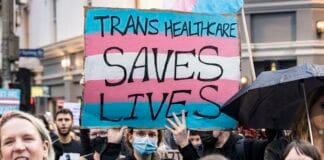
At the same time Donald Trump’s reactionary attacks on trans people are an attempt to push back everything won by the movement represented in the Mardi Gras. By sustaining the defiance of the anti-Herzog protest and finding allies across society we can win change just like those who stood up in 1978.