
Workers will be feeling the impact of the oil crisis produced by Donald Trump’s attack on Iran for months yet—even if the ceasefire holds.
Albanese is also to blame—he was one of the first world leaders to give his full support to the attack and has sent missile interceptors, a spy plane and a contingent of Australian troops to the Gulf to assist.
Iran’s closure of the Strait of Hormuz has blocked the transport of 20 per cent of the world’s oil and gas supplies.
This has seen the cost of living for working class people jump and threatens global economic chaos—which explains why Trump is so desperate to get the strait open again.
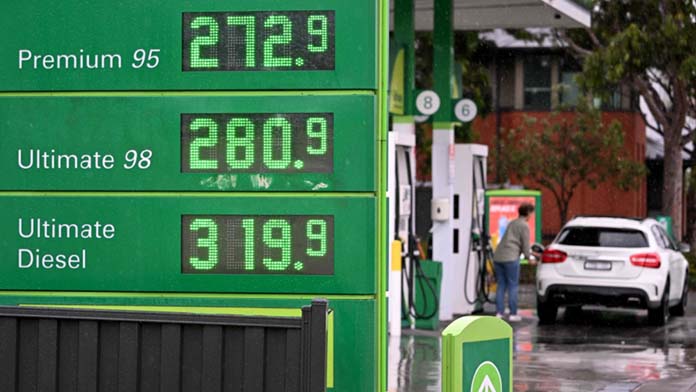
The surge in oil prices has fed a jump in the price of petrol
Some countries in Asia have begun rationing. The Philippines, Pakistan and Sri Lanka have all introduced a four-day work week to save fuel. Laos has moved schools to a three-day week while Pakistan shut them for a fortnight.
Petrol prices here are up at least 20 per cent, even after the government’s cut to fuel excise took off 33 cents a litre.
The price of diesel is up 70 per cent. Australia is one of the world’s heaviest users of diesel per capita. Farmers rely heavily on it to fuel tractors, harvesters and other vehicles, as do transport companies.
Fertiliser, which is produced from gas, has also jumped in price. Nearly a third of the world’s supply comes from the Gulf and Australia is particularly reliant on it. Locally there are shortages.
“Limited or cost prohibitive access to fertiliser and fuel could mean that some growers will not be planting a crop in 2026,” GrainGrowers CEO Shona Gawel told the Financial Review.
The higher costs and possible food shortages will flow through to higher prices for food and other basic goods for workers too. This means wage rises will fall further behind the cost of living. Inflation is expected to hit 5 per cent or higher by the middle of this year.
Oil economy
The crisis has exposed how reliant the world economy still is on fossil fuels. Oil and gas are used to make an enormous range of products, from plastics to pharmaceuticals and fertiliser as well as helium used in the manufacturing of electronics and technology goods.
Global food production is so dependent on fossil fuels that some have described it as eating oil.
But the risk of disruption to global oil supplies may speed up the use of renewable energy and electric vehicles, as countries look to maintain energy security.
Even if Iran agrees to reopen the Strait of Hormuz and the war comes to a halt, the impact will continue for months.
Iran intends to hold onto its control of the strait and charge tolls of about $2 million per tanker as a way to get compensation for the destruction caused by US and Israeli bombing.
Oil and gas facilities across Iran and the Gulf countries have also been damaged.
According to JPMorgan “more than 60 energy infrastructure assets in the Gulf have been affected by drone and missile strikes, with roughly 50 sustaining different degrees of damage”.
Some will be back online within weeks, others will take longer. QatarEnergy says that repairing its Ras Laffan oil and gas facility will take three to five years.
Economic consequences
The wider economic result will be higher interest rates and unemployment.
Anyone with a home loan or credit card debt faces increased repayments.
The Reserve Bank has already raised interest rates twice this year, saying inflation is too high.
It’s now almost certain to hike them further.
This will increase unemployment and cut economic growth.
The combination of low growth and high inflation raises fears of the “stagflation” that gripped economies worldwide during the 1970s economic crisis—which followed an earlier oil shock.
The IMF is forecasting slower global growth and has warned that a global recession will result if the war continues.
So far the damage to the world economy is nowhere near as deep as in 1970s.
But it hits economies already in weak shape.
The US economy grew at just 2 per cent last year, and in the EU things are worse, with the German economy barely growing at all.
Even in China economic growth has been slowing.
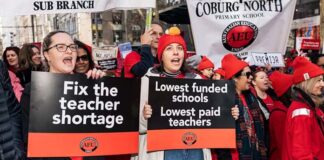
Workers will pay the price through job cuts and further strain on the cost of living—unless we fight back.
We need a union fightback to push up pay and make sure workers keep up with rising prices.
By James Supple