
Sophie Cotton looks at what happened in the Second Intifada, why Palestinians have a right to resist and what it means to Globalise the Intifada
The NSW Legislative Assembly committee that recommended banning the slogan “globalise the intifada” based this judgement on an implicit representation of the Second Intifada as antisemitic violence.
This period of Palestinian resistance from 2000-2005 followed the First Intifada (1987-1991) and has tended to be reduced to a series of 150 suicide bombings by Palestinians.
Even Palestinian historian Rashid Khalidi labels it a “fiasco” and a “setback for the Palestinian national movement”, arguing that Palestinian violence allowed Palestinians to be portrayed as “irrational, fanatical tormentors”.
But the Second Intifada was a significant return of Palestinian resistance, which kept Palestinian aspirations alive and posed more radical possibilities.
The Second Intifada was born not of irrational hatred but shifts in Israeli occupation following the Oslo Accords.
These accords, signed in 1993 by the Palestinian Liberation Organisation (PLO) and Israel, were a major defeat for Palestinians. Palestinian academic Edward Said wrote in The Morning After that the accords were a “moment of Palestinian surrender”. Israeli novelist Amos Oz called it the “second biggest victory of Zionism”.
Israel made meagre concessions, notably that they would “recognise” the PLO in return for a program of “normalisation”. The result for Palestinians, far from a state, was an extension of economic, social, and military oppression.
The West Bank was carved up into separate zones of control, with 60 per cent of the land under complete Israeli military control.
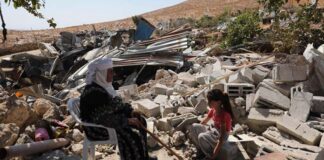
A program of military oppression was expanded, with 1700 homes destroyed between 1993 and 2000. The number of illegal Israeli settlers increased by 58 per cent.
Extreme military and settler violence continued, including six unarmed Palestinians killed during Nakba Day protests and 29 worshipping Palestinians killed by a US-born settler in Hebron in 1994.
Economic control tightened. Borders into Israel, Jordan and Egypt were controlled by the Israeli army, with restrictions on the export of Palestinian goods.
Unemployment sky-rocketed. The number of Palestinians from the Occupied Territories working in Israel declined from 30 per cent in 1992 to 7 per cent in 1996. During periods of comprehensive closure, unemployment could reach 50 per cent in the West Bank and 70 per cent in Gaza.
By 1999, unemployment in the Palestinian Occupied Territories had dropped from 32 per cent to 24 per cent, but was still much higher than in Israel at 9 per cent.
Meanwhile, figures connected to the main PLO faction, Fatah, now administered Israeli rule in the West bank, with Palestinian police retreating to make way for Israeli military incursions or cooperating to isolate Palestinian protest.
Everyday life for Palestinians reflected a brutal regime of oppression and a new complicit elite—all the result of the betrayals of Palestinian resistance by the Oslo Accords.
Intifada
A new round of resistance was sparked by a provocative visit of Likud party leader Ariel Sharon to the Haram al-Sharif, known to Israelis as the Temple Mount, in September 2000, flanked by 1000 Israeli police. This holy site in East Jerusalem was illegally occupied by Israel in 1967.
In response, thousands of Palestinians protested. They were met very quickly with disproportionate violence. Tanks rolled into the West Bank. Seven Palestinians were killed by tear gas and rubber bullets at the initial protests. One was Mohammed al-Durrah, a young boy photographed immediately before and after being shot to death by Israeli snipers.
September and October saw resistance from Palestinians within the 1948 boundaries of Israel, including a general strike. Twelve Palestinians were killed. Israel fired rockets into Palestinian leader Yasser Arafat’s residential compound in the West Bank city of Ramallah.
Eyewitnesses reported the use of chemical weapons, particularly in the Gaza city of Khan Younis. Palestinian leaders were assassinated. In early 2001, a Jewish settler who bludgeoned a Palestinian child to death with a rifle was sentenced to six months of community service.
This contributed to a deep and accumulating anger among Palestinians. The climate also handed Likud a landslide in the Israeli presidential elections in 2001. Escalation, reprisals, repression and resistance continued throughout the period.
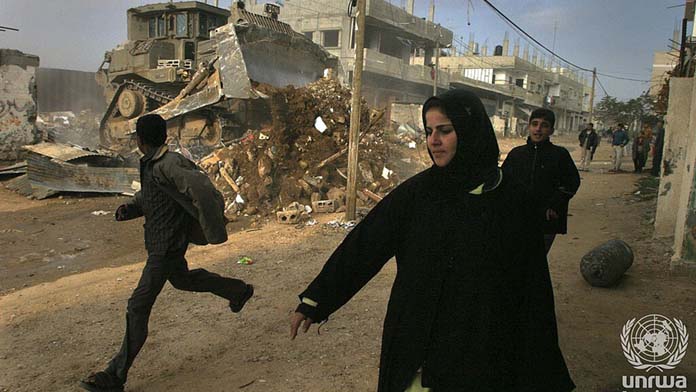
In 2002, Israel invaded the Jenin refugee camp, which was besieged by hundreds of tanks, Apache helicopters and bulldozers.
In the words of one Israeli soldier, “I found joy with every house that came down, because I knew they didn’t mind dying, but they cared for their homes. If you knocked down a house, you bury 40 or 50 people for generations.”
That year, Israel embarked on building what would become a 600-kilometre wall or “security fence” running through the West Bank. In 2003, a bulldozer crushed American activist Rachel Corrie.
Suicide bombings
One feature of the intifada were the suicide bombings, many of which targeted civilians, and which claimed about half of Israeli lives lost.
It is dangerous to represent these attacks as inexplicable and irrational violence. These deaths are a brutal consequence of Israel’s regime of social, economic, political and military oppression of the Palestinians.
As long as there has been imperialism, colonialism, slavery and apartheid, there has been resistance, including in some cases resistance that targets civilians.
Representations of bombings as gruesome competition between Palestinian factions tend to downplay the pressure that led Palestinians to take up bombing. While there were isolated cases of blackmail by Palestinian factions, bombers were generally motivated by Israeli state violence.
Bader Araj from Birzeit University interviewed the families of 42 suicide bombers during the intifada, considering different religious, economic, social, mental and exploitative motivations. Two in three bombers were primarily motivated by state repression while just under one in four were motivated by religion.
One such story is narrated in the documentary Arna’s Children, which follows young boys in a drama club in Jenin refugee camp. One boy explains how another had become motivated to be a suicide bomber following the invasion of Jenin.
After tank shells killed a girl in the school, his friend tried to save her but she died in his arms. “From then on he never stopped talking about her. Something inside him was hardened. There was no more laughing.”
The father of one suicide bomber told Reuters, with pride and sadness, “The Palestinians have no alternative to these (bombing) operations. We have no alternative way to reply to the Israeli aggression against our people.”
In their submission to the recent NSW Legislative Assembly inquiry, the Union of Jewish Students explained, “Ordinary routines were overshadowed by constant fear and anticipation of sudden violence.”
The everyday life of Palestinians under 50 years of Israeli rule had been reflected back on Israelis. Alongside 1083 Israelis killed in the ten years from the start of the intifada, the Israeli human rights organisation B’Tselem estimates 6371 Palestinians were killed.
Palestinian resistance was not just suicide bombing. There was armed resistance to combat Israeli military invasion and defend those fleeing it. Just under a third of the suicide bombings targeted military targets.
Nonviolent resistance and protest marches continued throughout. Major demonstrations in Budrous village in the West Bank succeeded in stopping bulldozers and pushing the border wall to the 1949 green line in 2003. Another demonstration in Biddu in 2004 saw over 500 Palestinians injured and one killed.
The most famous image associated with the Second Intifada is that of Faris Odeh throwing a stone at an Israeli tank.
Palestinian journalist Ramzy Baroud interviewed one man in a hospital bed in Jordan. After being shot in the neck and losing the ability to speak, travelling 22 days through 22 Israeli checkpoints to get to Jordan, he scribbled on a piece of paper with difficulty what he would do when he got out, “I want to go back and fight for Jenin.”
The Second Intifada represents more than anything the tenacity of the Palestinian resistance, which after decades of occupation continues to struggle for justice.
Strategies for change
It also revealed three political paths in the Palestinian movement.
The first was that of capitulation and collaboration. The Fatah majority collaborated in military and policing operations in the West Bank. Others connected to the Palestinian Authority profited by providing cement to build settlements and the border wall.
This strategy has been discredited, with Fatah reduced in the 2006 elections from over three quarters to a third of seats in the Palestinian legislative council.
The second political path was armed resistance. This was the strategy followed by Hamas, Islamic Jihad and parts of Fatah led by Marwan Barghouti.
But while Palestinians have a right to resist, armed resistance by Palestinians alone cannot defeat a state armed to the teeth by the United States and Western imperialism. The ongoing popularity of this strategy is a barrier to the growth of an alternative.
But a third political strategy was also posed by the resistance: a revolutionary movement capable of taking on imperialism in not only Israel, but Jordan, Egypt, Iran and beyond.
Solidarity campaigns spread across the Arab working classes. When Israel attacked Arafat’s compound in 2002, Arafat called for “a million martyrs for Jerusalem” as images of Palestinians being killed were broadcast.
The bankruptcy and empty words of the Arab rulers had been made clear, and a fire was lit under the working classes.
There were street occupations in Beirut. In Cairo, students protested, were pushed back by the regime, then returned and pushed the movement further. They called for real solidarity with Palestinians, ending oil supplies and material support for Israel.
In Alexandria, thousands marched on an oil executives’ conference and were suppressed by Egyptian military police. These actions helped coalesce networks that would contribute to Egypt’s Arab Spring.
This possibility of the Second Intifada is what needs remembering. Not senseless violence but a significant though bloody episode in the Palestinian resistance.
And it is this revolutionary strategy that “globalise the intifada” symbolises: shaking off the chains of imperial oppression in Palestine, Egypt, Iran, Australia and the United States.