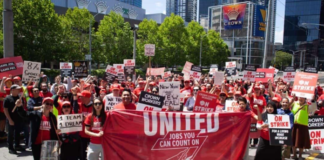

StarTrack workers are set to strike for 24 hours this Thursday. This follows a strike of over 7000 truck drivers at Toll in late August. With workers at Linfox and FedEx also balloting for industrial action, in all 15,000 workers across the industry could take action as part of enterprise bargaining.
New operators like Amazon Flex are undercutting wages and threatening a race to the bottom in the industry. Trucking companies are contracting out more of their work to cut costs.
“I’ve never seen so many outside hires being utilised within Toll. We’d rather more permanent jobs in the workforce rather than outsourcing to the lowest bidder,” Dave, a union delegate at Toll in Sydney, said in a video update on the dispute.
“We’ve been trying to negotiate an agreement with Toll for the last four months and not getting anywhere.”
Toll wants to create a two-tier workforce, with new employees hired on temporary contracts with lower wages and conditions. It also aims to contract out up to 40 per cent of its work, according to the union.
Workers at Toll are well paid but job security is under threat from contacting out and casualisation. The Transport Workers Union (TWU) is calling for a 3 per cent pay rise, after workers accepted a pay freeze last due due to COVID, and opposing the company’s efforts to employ short-term and casual workers instead of offering overtime to permanent staff.
At StarTrack, workers are demanding the same rates for labour hire workers as other workers, in an effort to defend job security and conditions.
The TWU wants an independent body established to create and enforce industry standards of pay and conditions, in order to stop the race to the bottom. But the only way to secure conditions is through industrial action and unionisation, not looking to parliament to enforce conditions.
Truck drivers have been among the essential workers keeping the country going through the pandemic, facing greater risks of COVID as well as new testing requirements to cross state borders, sometimes creating hours of delays. They deserve secure conditions and pay. And with delivery services becoming even more vital, trucking companies are also making bumper profits.
This means trucking workers now have greater bargaining power—and they should use it.