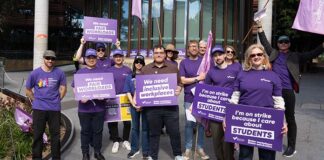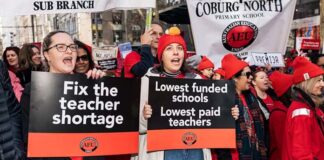

A huge fight is looming between workers across the Australian Public Service (APS) and the Abbott government.
The CPSU Governing Council has unanimously endorsed industrial action across the public sector, in the face of government plans to slash conditions and deliver real pay cuts. In early October the union began the process of balloting for action in the 30,000-strong Department of Human Services (DHS), the largest government agency.
Even before talks began, the government announced it would only allow wage rises which were paid for by cuts to conditions. But the government has only offered wage rises below inflation, between 0 and 1.18 per cent a year.
As CPSU Secretary Nadine Flood has said: “Many public servants are on average wages and they know the cost of living is increasing by 3 per cent a year … after months of negotiation in more than 70 agencies not one government agency has been able to present an acceptable agreement to its staff”. Public sector workers are having none of this—more than 4000 new members have joined the CPSU since May.
When DHS, which includes staff in Medicare, Centrelink and Child Support, revealed their proposed agreement, it was clear that most conditions would be stripped, a process called “streamlining”, and the union would be forced to fight to maintain every single condition.
The department has been forced to drop plans to put the draft agreement to a vote. According to CPSU Section Councillors, “Our union is making a huge impact. Members have shown by committing to action against these attacks that we can win.”
The CPSU is legally required to deal with each agency separately, and ballot separately for industrial action.
But this does not rule out APS-wide protests or co-ordinated strike action. Such united action, by involving a larger number of unionists, would build members’ confidence.
The union’s case includes a set of common APS-wide goals, and the need for a united approach was recognised at APS-wide delegates information sessions in August. We can counterpose our list of demands to the government’s APS-wide strategy.
Our strongest weapon is industrial action. This must include strikes to involve the largest number of members in united action, rather than simply industrial bans which can isolate individual unionists.
If CPSU members take action they can win widespread support in the community. We have a powerful political argument that the running down of services through job cuts and overworked staff will hurt ordinary Australians just as Joe Hockey’s Budget attacks do.
CPSU delegates are also leading campaigns to stop moves to outsource public sector work to the private sector, including the payments systems for Medicare, Veterans Affairs and Pharmaceutical Benefits payments, as well as moves to outsource Medicare and Centrelink call centres to Telstra. The ABC and SBS are also threatened.
The situation is dire. Many agencies are under-staffed since the series of funding cuts (via “efficiency dividends”) since the early 1990s. There were 8000 jobs lost in the last year alone, the highest level for ten years.
Enough is enough. The government’s Budget attacks face enormous opposition. We need to make them feel the same level of opposition to their war on public sector workers.
By CPSU delegates, Melbourne