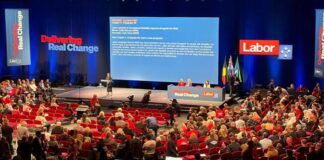

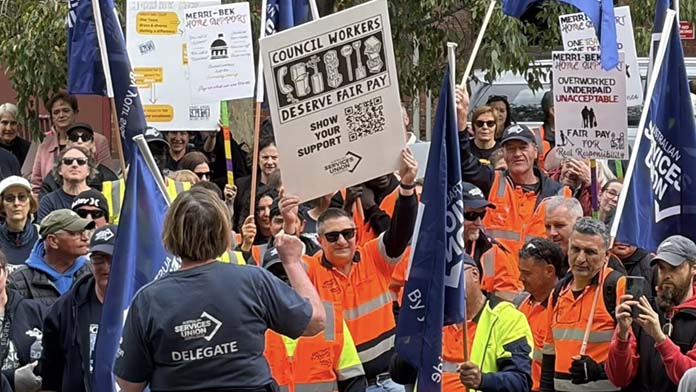
Labor’s budget delivers massive cuts to the NDIS and does next to nothing to help workers facing a new cost of living crisis and higher unemployment.
Instead Labor has again sided with gas companies and big business, avoiding pressure to make them pay more tax.
The cuts to the NDIS total an enormous $37.8 billion over four years. In the budget’s final year they cut 10 per cent of NDIS spending, kicking 160,000 people off the scheme. This is a brutal measure that will destroy people’s lives.
Workers are under pressure as inflation surges due to Donald Trump’s war on Iran.
But the only new direct cost of living relief is a $250 tax credit—and no one will see it until the middle of 2028.
Treasurer Jim Chalmers says the government has to be “responsible” and avoid more spending because this would only increase inflation.
Yet Labor is boasting of the “biggest peacetime increase” ever in military spending, up to 3 per cent of GDP within seven years, in line with the surge in arms spending taking place in Europe to appease Trump.
Over the next four years military spending will rise by $14 billion, with $53 billion more budgeted over the next decade. That’s on top of massive increases announced two years ago, bringing the total surge to $117 billion over ten years.
All up military spending will be $63.4 billion in the next year alone.
The obscene cost of the nuclear submarines is just one element of the money being wasted on weapons. They will drain almost $100 billion from the budget over the next decade.
Another $20 billion is going on new warships, $12 billion on drones, and $36 billion on missiles.
Offshore detention on Nauru also cost $1 billion last year, to torture just over 100 people dumped there.
This is all money that could be going into services or tackling the cost of living. The cuts to the NDIS equate to two-thirds of the cost of a single submarine.
JobSeeker payments are still leaving people deep in poverty, at just 42 per cent of the minimum wage. The increase in military spending alone could almost cover the cost of lifting JobSeeker to 90 per cent of the pension rate, as recommended by welfare groups.
And the budget’s “spending restraint” includes keeping in place the Morrison government’s “Job Ready Graduates” system of high student fees and lower university funding, and continued pressure on the public service.
Housing
House prices have exploded at rates far beyond wage rises as a result of changes to negative gearing and capital gains tax introduced by John Howard’s Liberal government in the 1990s.
Labor has finally acted on this—but its changes won’t fix the housing crisis. Chalmers has admitted “prices will continue to grow” just “more slowly” by about 2 per cent less over several years.
Instead of getting rid of negative gearing for existing properties completely, it is allowing anyone who already has an investment property to keep using it.
This means the full impact of the change will take years.
The cost to the government of these handouts to property investors has been around $16 billion a year. But the changes will raise just $1 billion in their first year.
If Labor had gone for serious change it could have spent the billions of dollars raised on building new homes. Instead the only new housing spending is $110 million for British and US troops here under the AUKUS deal, alongside $500 million a year for suburban infrastructure.
Increasing taxes on discretionary trusts, a way for rich families to avoid tax, is a positive step but won’t start for another two years. It will eventually recoup $4.5 billion a year.
Labor could have gone far further in taxing the rich. Australian billionaires increased their wealth by $10.5 billion in the last year, according to Oxfam. They can afford to pay up.
It has once again failed to fix the Petroleum Resource Rent Tax on gas companies. It will collect less than $2 billion next year and even less after that despite their massive profits.
Gas companies stand to make windfall profits of between an $28 billion and $57 billion this year due to the price surge following the war in Iran, the Green Institute estimates. That’s on top of the billions they normally rake in.
A 25 per cent tax on gas exports could raise $17 billion a year in revenue, according to the Australia Institute.
This is more than enough to restore all the cuts to the NDIS on its own.
Corporations and the rich have nothing to worry about from Labor. The only way to reverse the pressures on working class people is to fight.
By James Supple