
Donald Trump has the mightiest military in the world at his command. But he’s failed to defeat Iran, a regional power.
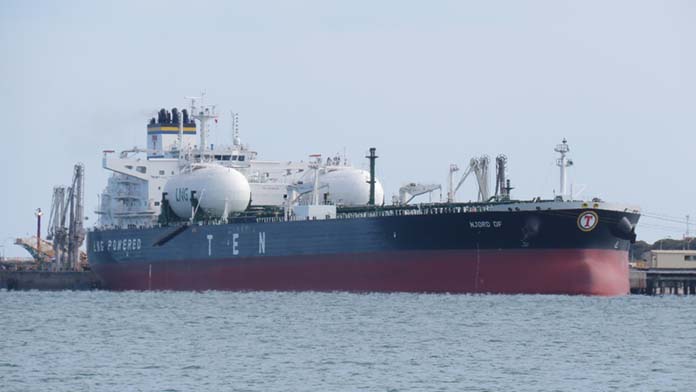
In a sign of his problems, Operation Freedom—which would have seen US forces escorting ships trapped in the Persian Gulf through the Strait of Hormuz—collapsed after two days.
On Wall Street, the acronym TACO (Trump always chickens out) has been joined by NACHO (not a chance Hormuz opens).
As Solidarity goes to press, Trump’s bluster swings between declaring peace to be at hand and threatening further destruction.
The US is hoping its blockade of Iranian shipping will further weaken the Iranian economy and force concessions from Tehran. Meanwhile, Iran is banking on the closure of the Strait of Hormuz, which has caused economic disruption worldwide, to bring Trump to heel.
Iran is in economic pain but seems to have the stronger hand. A combination of repression and nationalism has ended internal revolt for now. US hopes that its blockade would damage the oil industry, given that it is complicated for oil wells to be turned off and there is limited storage, have so far come to nothing.
Iran is ramping up trade with Russia via the Caspian Sea on its northern border. The New York Times reports that four Iranian ports along the Caspian are working around the clock to bring in wheat, corn, animal feed, sunflower oil and other supplies, including Russian drone components.
And the economic damage to the global economy from the closure of the strait is only getting worse, with The Economist warning that oil prices are likely to rise further.
Disruption to fertiliser supplies is raising the spectre of higher food prices everywhere and mass hunger in the Global South.
Trump’s woes
Trump is facing problems on three fronts. First, Gulf states targeted by Iranian strikes have proven squeamish about supporting the US. The New York Times revealed that Saudi Arabia denied access to Saudi airspace and American bases in the country, forcing Trump to abandon Operation Freedom.
Saudi Arabia is a US ally, a major buyer of US weaponry and hosts 2700 US military personnel. But that alliance did not prevent it coming under attack by Iran.
An essay in the US ruling class magazine Foreign Affairs warns, “There are strategists in every Gulf state arguing to downgrade or cut ties with the United States, pointing out that American security commitments failed to deter Iranian attacks and entangled the region in a months-long war.”
The Saudis are unlikely to break with the US but the regime is hedging its bets and shoring up its regional position by signing a defence pact with Pakistan, in turn a longstanding ally of China.
Trump’s second challenge is the cratering of domestic support as petrol prices skyrocket. According to opinion polls, disapproval of his presidency is running at near 60 per cent, with similar numbers opposed to the war with Iran.
And third, he is juggling the relationship with China, heading to Beijing as Solidarity goes to press in a state visit already once postponed because of the war. Trump will want to focus on trade but his blockade in the Gulf is preventing Iranian oil exports to China, an extra source of tension.
Trump is desperate for a peace deal with Iran. But to get there, he may once again unleash the awesome power of the US military.
The task of building an anti-imperialist, anti-war movement that weakens the US by breaking Australia’s complicity with Trump’s war aims remains urgent.
Wreaking havoc
Israel is abiding by the ceasefire with Iran for now but is continuing to wreak untold havoc on the people of Palestine and south Lebanon.
In Gaza, at least 837 Palestinians have been killed since the “ceasefire” last year. An Israeli air strike on 6 May killed the son of the head of Hamas’s political bureau and the Palestinian group’s top negotiator in indirect talks with Israel.
On the West Bank, Israeli settlers are rampaging through Palestinian villages with the complicity of the IDF.
The Israeli paper Haaretz reported on 10 May that settlers carried out more than 20 attacks across the West Bank over the previous two days, wounding several people, including a pregnant woman. Violence included home invasions, arson, stone-throwing and the uprooting of olive trees.
The same weekend, the IDF struck more than 20 targets in Lebanon.
Israel is systematically clearing the population from south Lebanon and razing villages, in scenes reminiscent of Gaza. Israeli Defence Minister Israel Katz says there are no plans to withdraw from what he calls a “security belt”.
By David Glanz