

James Supple looks at whether the ceasefire can last and what the last two years of genocide and resistance show about the prospects for Palestinian liberation
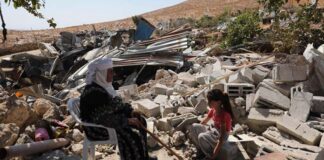
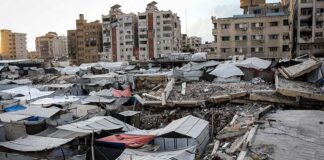
Israel’s genocidal war has seen Gaza all but obliterated. The ceasefire has delivered a pause in the daily slaughter but the situation for the two million Palestinians there remains a horror.
Its cities are piled with rubble and unexploded bombs, with hardly a building left standing. The basic requirements for life hardly exist—with little running water, sewerage or electricity services and still nowhere near enough food.
Israeli Prime Minister Benjamin Netanyahu has been forced to agree to a pause, for now, in his genocidal campaign. Trump’s “peace plan” has seen him accept that there will be no mass ethnic cleansing through forced expulsions from Gaza.
Despite talking to countries including Sudan, South Sudan and Somalia about accepting large numbers of Palestinians, Israel has been unable to find anywhere that will take them.
After supplying the weapons to carry out the genocide, Trump has decided he wants an end to the war, declaring that there will be an “enduring peace”.
The worldwide movement for Gaza, and Israel’s growing international isolation, has played an important role in forcing the ceasefire.
Trump says he told Netanyahu that “the world’s against you” and that “you can’t fight the world”.
But both Trump and Israel remain thoroughly committed to disarming Hamas and eradicating it as any kind of force in Gaza.
Trump himself has insisted that “If they don’t disarm, we will disarm them and it will happen quickly and perhaps violently.”
The ceasefire has produced a new wave of propaganda both from governments and the mainstream media demonising Hamas and trying to paint it as responsible for the killing in Gaza—and as the main threat to the peace deal.
The media seized on Hamas’ execution of gang members in an attempt to show that it was brutal and barbaric.
They failed to mention that Israel has armed these gangs in an effort to target and kill Hamas members and create chaos inside Gaza.
Hamas has also been accused of refusing to return the bodies of hostages from Gaza—despite the ceasefire deal explicitly acknowledging that some were so deep under the rubble it would need assistance to recover them all.
Hamas has not and is not likely to agree to disarm.
This would mean delivering Israel a total surrender and repudiating the movement’s basic reason for existence—resisting Israel’s brutal military occupation and achieving a Palestinian state.
Hamas is a Palestinian national liberation movement that uses the same methods of armed struggle as other elements of the Palestinian movement before it since at least the 1960s.
In this it is no different from the other national liberation movements including the South African ANC or the Algerian and Vietnamese independence movements.
It is not going to lay down its weapons while Israel continues to occupy Gaza and the West Bank, subjecting Palestinians to a regime of daily terror and oppression as it continues to try to steal more land.
Nor should Hamas have to disarm. Palestinians have a right to resist Israel’s illegal occupation under international law.
The last two years have shown the reality of Israel’s genocidal intent. Israel’s policy towards the Palestinians both within its 1948 borders and all the occupied territories swings only between apartheid and genocide. And as long as this continues Palestinians will continue to resist.
Israel has subjected Gaza’s whole population to hell on Earth, with even Israel’s military admitting that 83 per cent of those murdered were non-combatants.
There are countless orphans and families with dead relatives and children who will burn with rage against Israel’s monstrous crimes.
Israel is the source of all the violence in Gaza.
Yet far from calling on Israel to demilitarise and disarm, the world’s most powerful countries continue arming it to the teeth.
Imperialism
It’s estimated the US has spent between $31 and $33 billion arming Israel since October 2023.
This is the result, not of the Zionist lobby, but of the role Israel plays as a watchdog state for US interests in the Middle East.
Israel’s key role as a US garrison state also explains Anthony Albanese and the Australian government’s enthusiastic support for Israel.
US power is the centrepiece of the world order Australia’s rulers want to maintain.
Australia is an imperialist power itself that works under the umbrella of US global dominance.
As Albanese put it during his visit to Washington to meet Donald Trump, the US “sees our role in the Pacific as being critical”, with Australia working to counter China around the island states of the south Pacific.
Australia’s clout in the local region and the security of the trade and economic interests of Australian corporations and billionaires rely on US backing. There are enormous sums of wealth and power at stake that Australia’s rulers will stop at nothing to defend.
And Albanese is working to ensure continued US support through spending hundreds of billions of dollars on the AUKUS nuclear-powered submarines, missiles and warships, and expanding the US military footprint here.
Backing Israel is another part of the bargain.
So while Albanese, under the pressure of the mass movement for Palestine at home, agreed to symbolically recognise a separate Palestinian state, he has been right behind Israel’s aim of wiping out Hamas from the beginning.
Albanese lavished praise on Trump’s ceasefire deal, calling it an “extraordinary achievement” while his Foreign Minister Penny Wong laughably labelled it the “biggest contribution to peace in the Middle East for a generation or more”.
If Trump and Israel decide they need to restart the killing to finish the job on Hamas, Albanese will be right behind them.
The last two years have proven again how important Israel’s service to US imperialism is.
After the US’s disastrous wars in Afghanistan and Iraq, its hold on the Middle East faced increased challenge.
Iran in particular emerged strengthened, with growing influence stretching across Iraq, Syria, Lebanon and Yemen. Hezbollah also inflicted a significant defeat on Israel in the war of 2006.
But since October 2023 Israel has turned the balance of power in the region back decisively to the advantage of US imperialism.
It was able to focus on pulverising Hamas in Gaza for almost a year while Hezbollah and Iran largely held their fire.
Then Israel moved to inflict serious blows against Hezbollah, forcing it into a punitive ceasefire agreement. After that it set back Iran’s nuclear and ballistic missile programs in turn and showed that it could withstand Iranian missile barrages with relatively minor damage.
Not only has Hamas itself suffered major blows, reduced to fragmented guerrilla operations, but any hopes that the Iranian regime and its “axis of resistance” might come to its aid have been comprehensively dashed.
Resistance
The continued Palestinian resistance despite decades of Israeli savagery has inspired workers and the poor across the region who face their own poverty and oppression because of imperialist domination.
But on their own the Palestinians do not have the power to defeat the armed might of Israel and the US military machine that stands behind it.
The focus on armed struggle has always involved alliances with other regimes in the region to deliver arms and financial support. For decades the Palestinian Liberation Organisation upheld a policy of “non-interference” in the affairs of other Arab regimes such as Saudi Arabia, Jordan and Egypt.
It sought both funding and diplomatic support to establish a “government in exile” as a step towards its own state. Drawing support from these regimes has meant the Palestinian resistance is forced to side with the rulers against popular revolts from below.
Relying on regimes like Iran to aid the Palestinian struggle is a result of the same logic. Iran is a regime that not only brutally represses its own population but has shown that its main priority is preserving its own power and wealth.
But there is an alternative to this.
It lies in mass struggles to topple all the regimes across the region that collaborate with imperialism—including in states like Egypt and Jordan that border Palestine.
The Arab rulers have all lined up behind the demands for Hamas to disarm.
The Washington Post revealed in October that Bahrain, Egypt, Jordan, Qatar, Saudi Arabia and the UAE had been expanding military co-ordination with Israel right through its genocide in Gaza. Regular meetings have been held whose main purpose was to co-ordinate action against Iran.
Revolutionary movements, especially in countries with a large working class such as Egypt, are the key to end imperialist domination and the most important ally for the Palestinian movement.
In 2011 the anger at the poverty and repression in the Arab world spilled over into a wave of revolutions that toppled regimes. There are sure to be similar revolts in the future.
The mass strikes in Italy and Greece in recent months show how support for the Palestinians can inspire millions of workers to move into action.
If this kind of workers’ revolt spreads into the Middle East it has the power to mount a genuine challenge to imperialism and Israel, and make it possible for Palestine to finally win liberation.