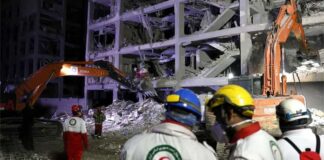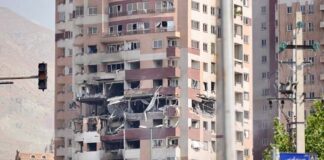

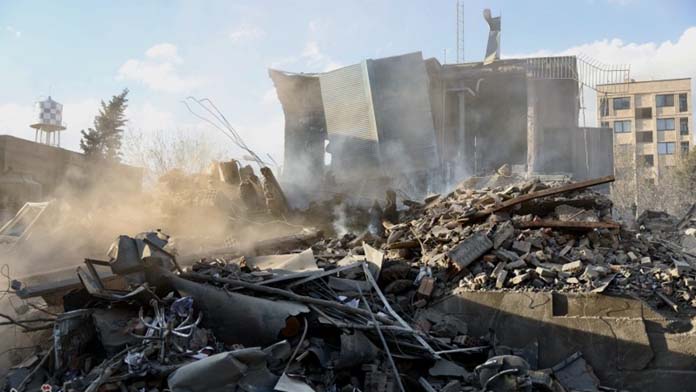
The US-Israel war on Iran has brought death and destruction to Iranian cities. But it has also humiliated Donald Trump and highlighted the relative decline of American power.
Trump declared that he would settle for nothing less than an unconditional surrender. But in mid-April, his Vice-President, JD Vance, had to fly to the Pakistan capital of Islamabad to negotiate with Iranian leaders—the first direct contact between the two governments since 1979.
The talks failed, with Iran refusing to accept US terms for ending its nuclear program. Far from surrendering, the Iranian regime appears confident enough to stand its ground.
As Solidarity went to press, the US navy was beginning a blockade of Iranian ports on the Persian Gulf, an act of war that could break the fragile ceasefire.
Meanwhile, Israel is continuing to wreak destruction on Lebanon, despite Trump saying he’d instructed Prime Minister Benjamin Netanyahu to “low key” it.
But for now, the US military has failed. It has badly depleted its stock of anti-missile interceptors, using Patriot and THAAD missiles costing $6 million each to shoot down Iranian drones costing thousands. A combination of Iranian attacks, friendly fire and accidents has destroyed about 16 US aircraft.
Two US aircraft carriers that were central to projecting US force against Iran have withdrawn, with unconfirmed reports that one had come under Iranian attack.
If the Trump administration thought they would get a quick victory, as they did in Venezuela, they were proven badly wrong. The US still has the most powerful military in the world but it cannot win a war from the air and lacks the political confidence to send 200,000 or more soldiers to invade Iran.
Oil supplies
The US and Israel launched their war on Iran on 28 February, killing Ayatollah Ali Khamenei and other senior leaders.
Trump boasted that there would be victory within 48 hours, brushing aside warnings from his military advisers that Iran would respond by closing the Strait of Hormuz.
The war has blown up in his face just seven months before US midterm elections. Iran’s control over the Strait has cut off 20 per cent of the world’s oil supplies, leading to big spikes in the price of petrol, diesel and liquid natural gas, as well as fertiliser and helium, an indispensable component of advanced semiconductor manufacturing.
The result is certain to be lower economic growth and higher inflation. Workers filling their petrol tanks and farmers planning their plantings are all suffering.
There is a serious risk that food output will fall, spelling higher prices for workers in countries like Australia and potential famine in the Global South.
If the war restarts in earnest, the situation could get much worse.
The economics organisation, the OECD, forecasts, “Higher energy and fertiliser prices could spur increases in food prices, particularly affecting vulnerable households.
“Higher energy prices could also increase the cost for European countries carrying out necessary annual replenishing of natural gas stocks. Financial markets may experience additional volatility.”
The economic blowback from the war has seen Trump’s domestic approval ratings fall as low as 34 per cent. Some 53 per cent of Americans oppose the war and 62 per cent oppose sending ground troops.
In Australia, a Resolve poll in mid-March showed just 28 per cent in favour of the war.
Iranian civilisation
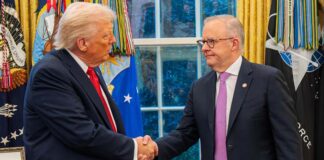
With the war unpopular and fuel supplies at risk, Prime Minister Anthony Albanese has crab-walked away from his initial enthusiastic support for the US-Israel attack.
He described Trump’s threat to destroy Iranian civilisation as … wait for it … “inappropriate”. And he’s claimed that Australia is not involved in the war and would not send troops or ships.
But despite his protestations, Australia continues to be embedded into US war plans. The Wedgetail spy plane sent to the UAE to coordinate “defence” is sharing its data with US commanders. The Pine Gap spy base in the Northern Territory allows the US to track missile launches and pinpoint targets.
And the North-West Cape signal facility in WA was probably involved in sending approval to a US submarine with three Australian service personnel on board to sink an Iranian ship off Sri Lanka.
US and Israeli bombs cannot liberate workers, women and minorities in Iran. And the warmongers are throwing the global economy into chaos, wrecking the lives of workers and farmers everywhere.
The imperialist madness must end and challenging Labor’s support for the US and Israel is a first step. That means campaigning to break the US alliance, cancel the AUKUS nuclear-powered submarines deal and close all US bases.
By David Glanz