

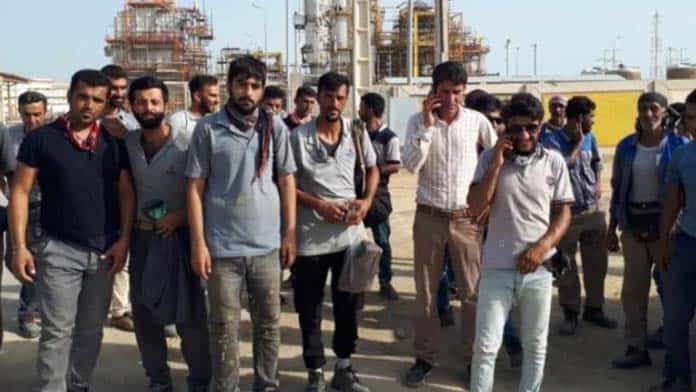
Thousands of workers in Iran’s oil industry have joined a strike wave. The action has spread across at least 70 companies across oil and gas refineries, petrochemical plants and power plants in eight provinces across the country.
The strike began among contract workers, organised by strike committees co-ordinated through the Council for Organising Contract Oil Workers’ Protests, shortly after the 19 June presidential elections.
Workers are increasingly employed by contract agencies on fixed term contracts instead of as permanent employees. They receive far less pay and worse conditions. There are around 150,000 contract workers in the oil sector.
The workers are demanding a pay rise from $400 to at least $650 a month and an end to payment of wages often months late.
Inflation in Iran is running at 50 per cent.
Workers also want the right provided under the 2010 labour law to ten days off for every 20 work days, currently applied only to permanent workers.
Many of the oil fields are in remote areas long distances from workers’ homes and long periods off work are needed to visit families.
The action follows strikes in July last year that lasted more than a month across 15 companies. The new strikes have spread even further, as part of a co-ordinated effort the workers are calling “Campaign 1400”, as the year is known in the Iranian calendar.
After the strike began, “some of our colleagues left their workplace and returned home, but some of us have remained in workers’ dormitories,” a statement from the Council for Organising Contract Oil Workers’ Protests said.
“Ruthless employers are firing day labourers and preparing to hire new workers. Therefore, if we stay in the dormitories, the employers will not have a place to house the new workforce.”
The US hopes to take advantage of protests and strikes in Iran to put a friendly regime in power. But US sanctions have increased hardship for ordinary people, and led to shortages of medical supplies to tackle COVID.
The US and other Western powers like Australia are no friends of Iranian workers.
Workers’ revolt in support of their own demands holds the key to ending poverty and inequality both in Iran and all across the region.