
The “open war” declared by Pakistan’s defence minister against Afghanistan marks a terrifying escalation in a region already reeling from conflict.
Fighting resumed after a temporary ceasefire over Eid in the area not far from the ongoing US and Israeli assault on Iran.
Pakistan launched an airstrike that hit a known drug rehabilitation centre in Kabul on 16 March, killing more than 400 people.
The current violence began in late February when Pakistan struck targets inside Afghanistan, saying it was targeting bases and hideouts of the Tehrik-e-Taliban (TTP), a militant group that has killed over 1200 people in Pakistan in the past year.
This led to retaliatory attacks by the Taliban along the border. Pakistan then bombed Bagram Air Base—once the crown jewel of the US-led occupation—claiming to have killed dozens.
Pakistan accuses the Taliban of harboring the TPP, also known as the Pakistani Taliban. The group shares ideological links with the Taliban and also appeals to the opposition of local Pashtun tribal groups in Pakistan’s northwest to their integration into the country.
The Pashtun are the largest ethnic group inside Afghanistan, divided between the two countries as a result of the border drawn up under British colonial rule.
The TPP’s rise is a product of blowback from Pakistan’s long history of support for various armed Islamist groups in Afghanistan, beginning with its efforts to support the US proxy war against the Russian invasion in 1979. It also supported the Taliban in the 1990s and was one of the few countries to recognise the Taliban government when it first took power in 1996.
The TTP was a direct byproduct of the Taliban—formed by Pakistani jihadists who fought alongside the Afghan Taliban in 2007.
Its insurgency is now destabilising the Pakistani state, staging attacks in the capital Islamabad as well as in provinces of the country well beyond its heartland in the border areas.
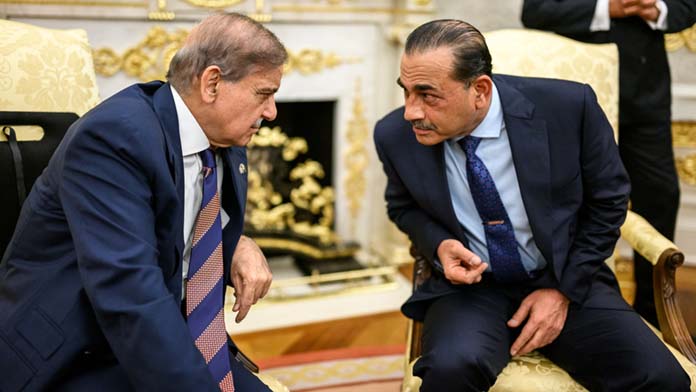
The problem is magnified by the weakness of the civilian government. Prime Minister Shahbaz Sharif runs a minority government with the support of a fragile coalition, leaving him dependent on the military. The war with Afghanistan serves a dual purpose: it is aimed at destroying a militant threat to the state and it allows the military to present itself as the state’s indispensable defender.
This lays the ground for another potential military takeover. The government has already made a series of moves to try to keep the generals onside.
Towards the end of 2025, parliament approved an amendment giving Field Marshal Asim Munir full legal immunity for life and expanding his control as “Chief of the Defence Forces”.
A further amendment to article 243 in Pakistan’s constitution effectively granted immunity from criminal prosecution to all the top-ranking military leaders while also reshaping the military command structure.
Meanwhile, the economy is collapsing under the weight of all these conflicts. The war on Iran has led to a 24.5 per cent spike in petrol prices, with overall inflation hitting 10.5 per cent in a matter of days.
The country is in such disarray that it has mandated school learning to shift online, with every Friday becoming a mandatory public holiday indefinitely.
Imperialist rivalries
The war is also being fuelled by broader imperialist rivalries. Pakistan’s major rival, India, has sought to develop ties with the Taliban since its conflict with Pakistan began. This leads Pakistan to fear that India will offer military support for the Taliban’s war against it.
The contest between the US and China is also involved. In recent years Pakistan has moved closer to China, relying heavily on Chinese-designed J-10C fighter jets and missiles.
The two countries also agreed to launch the China-Pakistan Economic Corridor (CPEC) in 2015—part of China’s ambitious Belt and Road Initiative (BRI).
The BRI is a network of ports, railroads and highways aimed at connecting Asia, Africa and Europe. It involves tens of billions of dollars of Chinese investment in Pakistan.
As part of this China has received a 40-year lease giving it control of the port of Gwadar, strategically located on the Indian Ocean.
China has also sought to extend the CPEC into Afghanistan and extend its influence in the region, hoping to broker peace between the two sides.
But the new government in Pakistan is also trying to hedge against over-reliance on China, joining Donald Trump’s Board of Peace and working to ingratiate itself with the US President through business deals including a plan to redevelop a hotel owned by the Pakistani government in New York.
Pakistan has received encouragement from the US to launch its war against the Taliban, with the US state department declaring its support for “Pakistan’s right to defend itself against Taliban attacks”.
Afghanistan crisis
Pakistan has also sought to starve Afghanistan economically. Islamabad made a consistent effort to deliberately cut key trade routes to Kabul in October, devastating the landlocked Afghan economy which depends on goods passing through Pakistan.
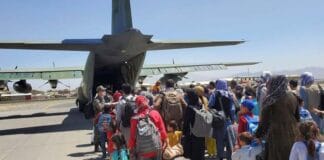
This economic warfare also involves cruelty towards refugees who are fleeing the Taliban and entering Pakistan at the north. The Pakistani government deported more than one million Afghans in 2025 alone. Since 2023, a staggering 3.4 million Afghans have been forcibly deported from Pakistan and Iran.
Since the Taliban returned to power in 2021 the West has also blocked aid to Afghanistan and tried to isolate the new government.
The follows the US’s 20-year war and occupation of Afghanistan, backed by the Australian government, that left the country’s economy in ruins.
Australia must open its doors to Afghan refugees and reject the racist scapegoating of those fleeing the Taliban regime that the West’s occupation of Afghanistan has revived.
By Tooba Anwar