
Sara Alasfar writes on why Palestinians inside Israel’s 1948 borders voted in record numbers in the election, and what it shows about the sham of Israeli democracy
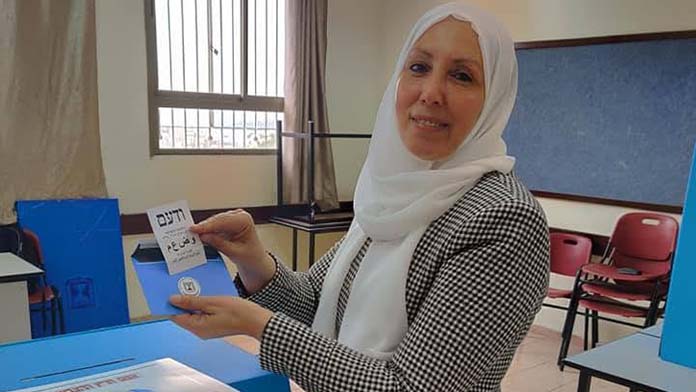
On 27 October, Palestinians in Nazareth, Umm al-Fahm and the villages of the Naqab queued for hours to vote. Hours away, in besieged Hebron, other Palestinians were packing what they could carry. Soldiers had painted a black X on their doors. An X means one thing: leave and do not expect a home to come back to.
One land, one occupation regime, two faces of the same occupation system.
The people who stayed
Those voting are the Palestinians living inside Israel’s 1948 borders: the families who held on to their land through the Nakba while more than 750,000 of their people were driven out. Today they number about 2.1 million, a fifth of Israel’s population. They hold Israeli citizenship yet live in a state whose 2018 Nation-State Law reserves national self-determination for Jews alone.
From 1948 to 1966 they lived under military rule: requiring permits to leave their villages, facing curfews and mass land confiscation. In 1956, border police massacred 49 villagers in Kafr Qasim for returning from the fields at the end of the day after a curfew they had not been told about. On Land Day in 1976, six were killed protesting the seizure of Galilee land. In October 2000, police shot dead 13 Palestinian citizens. No one was ever convicted.
Israel’s Citizenship Law bars Palestinians from the West Bank and Gaza from living with their spouses inside Israel, splitting families by statute. Admissions committees let Jewish towns turn Arab families away. The Nakba Law penalises institutions that mourn 1948. In the Naqab, tens of thousands live in “unrecognised” Bedouin villages denied water, electricity and roads; al-Araqib has been bulldozed more than 200 times. Its people rebuild every time. In 2024, a record 5187 Bedouin structures were demolished.
And then there is the violence the state chooses not to stop. Organised crime has killed at least 184 Palestinian citizens this year, after a record 252 in 2025. Police file charges in only about 12 per cent of the killings of Palestinians, against 65 per cent when the victim is Jewish. The police answer to far-right National Security Minister Itamar Ben-Gvir and have investigated more than 400 Palestinian citizens for “incitement” since October 2023. Neglect, here, is policy. They live as third-class citizens in their own homeland.
Why did they vote this time?
Many Palestinians inside Israel have long boycotted elections, refusing to legitimise a parliament built on their dispossession. In 2022, Palestinian turnout was 54 per cent. This year, early estimates put it near 80 per cent, the highest in decades and, for the first time, above the Jewish turnout.
This was a result not of faith in Israeli democracy but an act of collective self-defence, after two years of genocide in Gaza, open talk from far-right Minister Bezalel Smotrich of “Judaising” the Galilee and Naqab, and an election committee that voted in September to disqualify both Arab party lists, reversed only by the Supreme Court.
The Arab parties in the Joint List and Ra’am are on course for 19 seats. Netanyahu’s bloc stands at 53 while the opposition is on 48 seats, both short of the 61 needed to govern. Suddenly, the Arab vote appears to be in a position to decide who forms government. But none of the major Jewish parties are willing to have them as part of their government.
Hebron: the campaign rally
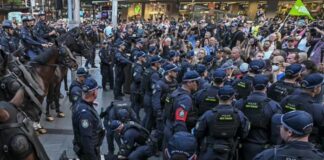
On 23 October, a few days before the election, two young Palestinian men from Hebron in the occupied West Bank attacked a military checkpoint, killing two soldiers. Within hours, Netanyahu announced what he called the largest military operation in the West Bank since 1967.
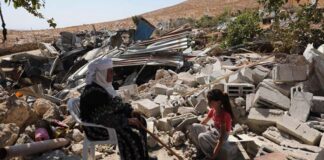
No checkpoint attack explains an offensive of this scale. Raids hit 15 cities. Hebron was sealed by 128 gates and 120 checkpoints. By 29 October, the governor reported 3361 people from 537 families had been forced from their homes; the municipality counts nearly 5000 affected, including 336 infants, 441 elderly people and 216 pregnant or breastfeeding women. More than 110 were detained across the governorate in five days. Homes in Khallat Manna were seized as barracks; some 35 hectares were demolished or marked for demolition. Israel’s public broadcaster reported that Netanyahu overruled his own chief of staff’s advice to end the operation.
This was planned dispossession waiting for a pretext, staged in the final days of an election campaign. For Israel’s terrorist far right, cruelty towards Palestinians is a manifesto. The UN human rights chief warned of collective punishment and “ethnic cleansing”.
Hebron follows a template. In the northern West Bank, the Jenin, Tulkarm and Nur Shams refugee camps were emptied by the army in early 2025. UN figures show 33,000 people still displaced; in August, the army told Israel’s Supreme Court they “will not be permitted to return at this stage”.
The harvest and the road
Between 80,000 and 100,000 Palestinian families depend on the olive harvest. By mid-October, the hundreds of harvest-related settler attacks had already exceeded those across the entire 2025 season; 100,000 trees were damaged this year before picking began. Settlers steal crops, burn groves and beat farmers, usually under army watch. Thousands of settler attacks have been recorded in 2026, a record. This is settler terrorism with a state budget behind it, aimed at the economic base of rural life: empty the land, then take it.
In Ramallah, the army is preparing to open Route 463 to settlers, part of a 1.075-billion-shekel settler infrastructure package. Ten kilometres of road would cut off eight villages and two neighbourhoods, carving a governorate of nearly 400,000 people into cantons.
The scapegoat
If Netanyahu falls, Europe and Washington will be tempted to call it accountability, to blame one man for the genocide and welcome Israel back into the fold under Gadi Eisenkot, a former army chief of staff. But Netanyahu did not bomb Gaza alone. The army, the Shin Bet, the air force, the courts and every government since 1967 built the settlements, the prisons and the siege. Sacrificing Netanyahu would launder the state.
The thorn in the throat
The Palestinians of Israel ’48 have carried a heavy weight for 78 years: the identity the state tried to erase, the land it tried to take, the homes it demolished, the sons it let die in the streets. They stayed—and staying was itself an act of resistance. This October they turned that endurance into collective action inside a system built to keep them powerless.
At the same moment, Hebron’s families were walking out of their homes under guard and the whole West Bank was locked down, raided and imprisoned. They are two fronts of the same struggle, met by the same apartheid.
What the ’48 Palestinians did should be studied, not as a lesson in Israeli occupation “democracy”, but as a lesson in Palestinian organisation. It is a thorn in the throat of the occupation that has exposed the sham of Israel’s democracy. It must stay there.
By Sara Alasfar